Wall Street Notches Ninth Straight Week of Gains Despite Disappointing ISM Data
Introduction: Wall Street Defies Uncertainty
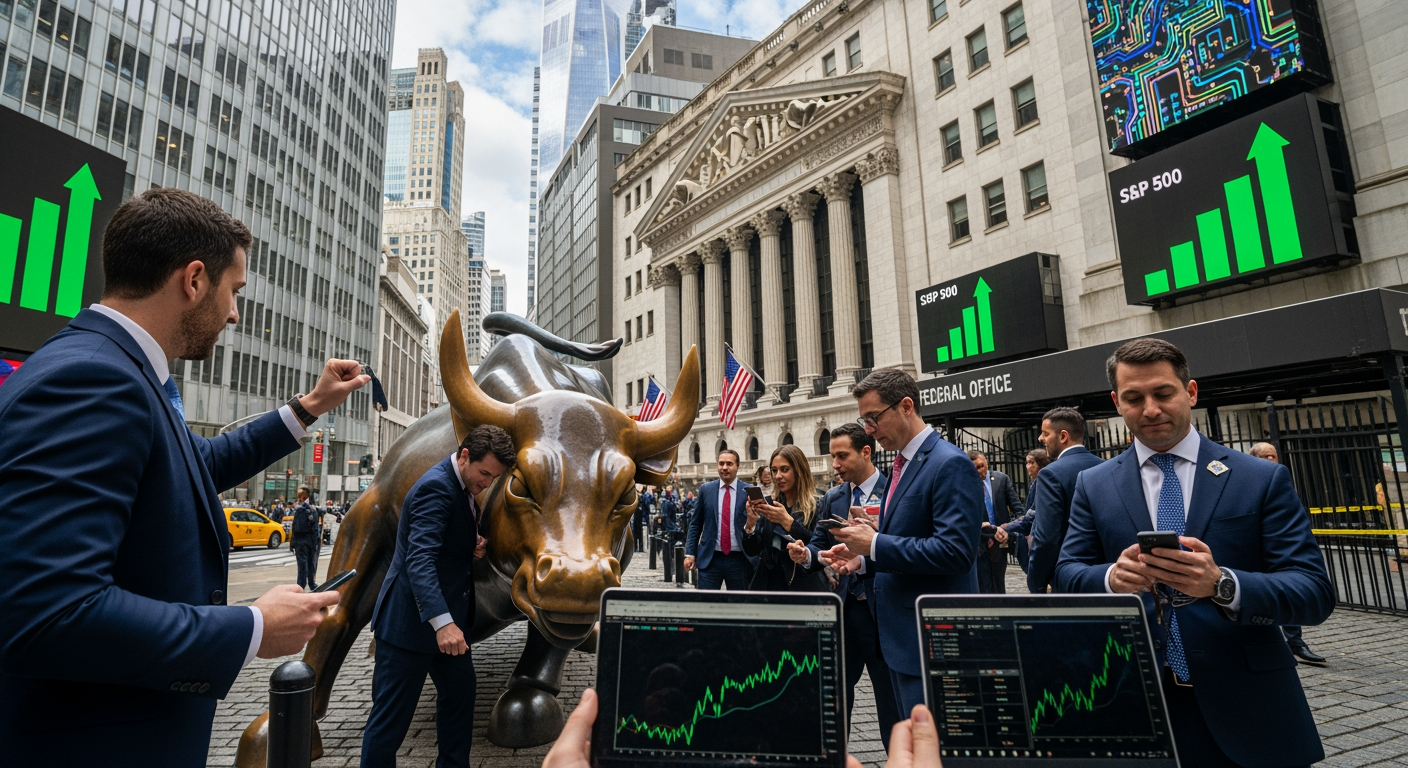
Never has the famous “Wall Street bull” metaphor felt more fitting than in early October 2025. Despite an uncertain economic backdrop—marked by another US government shutdown and a fresh low for the ISM Services Index—US financial markets are breaking new records. The Dow Jones and S&P 500, true barometers of global finance, have extended their winning streak to nine consecutive weeks, displaying a resilience that’s as intriguing as it is impressive.
Even as investors were left without their usual stream of economic data—most notably jobs numbers—due to the federal government shutdown, the New York Stock Exchange kept racking up green sessions. This paradox, where typical caution in the face of uncertainty gives way to an appetite for risk, deserves a closer look. Why is Wall Street ignoring warning signs? Who’s coming out ahead? What’s in store for the weeks ahead?
In this article, we dive into this historic run, break down the drivers behind the rally, examine the impact of the shutdown, and look ahead to the factors that could shape the next moves in the market.
US Shutdown: Unprecedented, But Not a Dealbreaker
Why Does a Shutdown Usually Rattle Markets?
In the US, a shutdown happens when Congress fails to pass the federal budget on time. This leads to the suspension of many government agencies, a freeze on certain public services, and—crucially—the halt of major economic data releases, like the monthly jobs report. Historically, this kind of institutional uncertainty weighs on markets, as investors worry about a slowdown in consumer spending and negative impacts on US growth.
But October 2025 is bucking the trend. Despite the partial shutdown of the federal government, the lack of official data hasn’t dampened traders’ enthusiasm. According to Trading Economics, the S&P 500 hit an all-time high of 6,754 on October 6, up more than 18% year-over-year. The Dow Jones is also flirting with record territory, as is the Nasdaq, reflecting a broad-based rally in US stocks.
The Paradoxical Effect of Missing Data
Instead of cooling risk appetite, the absence of official data seems to have emboldened markets on their upward path. As Charles Schwab noted, investors have simply “shrugged off” the missing jobs report, choosing instead to focus on the prospect of Fed rate cuts and the ongoing buzz around artificial intelligence.
This unusual situation has thrown traditional benchmarks out the window. With their usual statistical compass missing, market participants are turning to other indicators—like available liquidity and corporate announcements—to guide their decisions. That’s part of why the rally has continued, even amid political and economic uncertainty.
Disappointing ISM Services, But Markets Stay Unfazed
The ISM Index: A Warning Sign Ignored
The ISM Services Index, which measures activity in the US service sector, slipped to 50 in September 2025—right on the edge of contraction territory (anything below 50 signals a decline). This figure, well below expectations, could have triggered a market pullback. Yet Wall Street barely blinked.
While the ISM is a key gauge of US economic health, its impact has been downplayed in the current environment. Investors seem to view the drop as further justification for a more dovish Fed. In other words, a weak ISM increases the odds of rate cuts, which is good news for risk assets.
Liquidity: The Main Fuel for the Rally
One of the major factors behind Wall Street’s strength is the abundance of liquidity in the markets. The expectation that the Fed could start cutting rates as soon as this month—a view now widely priced in—has created a favorable environment for risk-taking.
According to Trading Economics, markets are almost fully pricing in a 0.25-point cut at the next Fed meeting, with a likely second cut in December. This ultra-accommodative monetary policy is driving stocks higher, especially in tech and semiconductors.
AI and Tech: The Engines of the Rally
The OpenAI Effect and Tech Outperformance
The wave of optimism around artificial intelligence (AI) continues to lift Wall Street. OpenAI’s recent funding round, which valued the company at $500 billion, acted as a catalyst for the entire tech sector. Heavyweights like Microsoft, Nvidia, and Alphabet are benefiting from a surge of investment and high expectations for innovation.
The Nasdaq, with its heavy tech weighting, rose more than 1.3% on the week, also hitting a new record. Semiconductor stocks, such as Applied Materials and Lam Research, are facing some volatility due to US export restrictions to China, but the overall excitement around AI is more than offsetting these short-term concerns.
Small Caps and Sector Diversification
Another key development: the outperformance of small caps. The Russell 2000 index gained 12% in the third quarter, signaling healthy market “breadth” and a diversification of rally drivers. This trend points to broad-based optimism, not just in the big tech names.
Healthcare and utilities have also stood out, boosted by news around drug pricing (notably Pfizer) and by falling interest rates, which make these sectors more attractive in uncertain times.
Key Players: Companies and Institutions in the Spotlight
Standout Companies
Several companies have made headlines recently:
The Fed and Monetary Policy Decisions
The Federal Reserve remains front and center. Investors are parsing every statement from Fed officials for clues about the rate outlook. The prospect of monetary easing, reinforced by weak indicators like the ISM, is the main driver of the current rally.
In this context, the release of Fed meeting minutes and speeches from FOMC members will be closely watched in the coming days. Even a slight shift in tone could spark significant market moves.
Underlying Risks: How High Can Wall Street Go?
A Rally Disconnected from Fundamentals?
While the current momentum is impressive, some analysts worry about a possible disconnect between asset valuations and economic reality. The lack of official data—especially on jobs—leaves markets flying blind. This “statistical blindness” could be masking vulnerabilities, such as a weakening labor market or slowing consumer spending.
What’s more, the sharp run-up in indexes has pushed them well above long-term moving averages—a sign the market could be overbought. The volatility index (VIX) has dropped to 16.40, reflecting a complacency that could quickly reverse if bad news hits.
Possible Scenarios Going Forward
Three main scenarios are on the table for the coming weeks:
Outlook and Trends: What to Watch Next
Upcoming Catalysts
Investors are now looking ahead to several key events:
Long-Term Trends: AI, Energy, Healthcare
Beyond short-term swings, several structural trends continue to support US equities:
Conclusion: Wall Street—Euphoria Meets Caution
Wall Street’s ninth straight week of gains, set against a backdrop of a shutdown and missing economic data, will go down as a unique moment in market history. Fueled by abundant liquidity, expectations of Fed rate cuts, and AI-driven excitement, US indexes are defying traditional caution.
But this euphoria isn’t without risk. The lack of visibility on fundamentals, the potential for a correction if surprises hit, and the market’s reliance on monetary policy all call for heightened vigilance. For investors, now is the time for diversification and active risk management—keeping an eye out for subtle signals that could mark a regime change.
More than ever, Wall Street is showing that market psychology, the power of innovation, and the agility of institutions can, at least in the short term, outweigh traditional economic fundamentals. Time will tell whether this period marks the start of a new cycle or the peak of a fleeting euphoria. One thing’s certain: the US stock market still has plenty of surprises in store.
---
❓ FAQ - Frequently Asked Questions
1. What is a US government shutdown and why does it matter for markets?
A shutdown occurs when Congress fails to pass a federal budget on time. That triggers the suspension of many government agencies, freezes certain public services, and halts key economic data releases—most notably the monthly jobs report. Historically, this kind of institutional uncertainty weighs on markets because investors worry about weaker consumer spending and slower US growth. However, October 2025 is bucking the pattern: despite a partial federal shutdown and missing data, US stocks continued to climb. The S&P 500 even hit an all-time high of 6,754 on October 6, up more than 18% year-over-year, while the Dow and Nasdaq also pushed toward record territory. The unusual resilience reflects investors’ focus on potential Federal Reserve rate cuts and optimism around artificial intelligence, which have overshadowed the typical market caution associated with a shutdown.
2. What is the ISM Services Index and what does a reading of 50 mean?
The ISM Services Index measures activity in the US service sector, a major component of the economy. Readings above 50 indicate expansion, while those below 50 signal contraction. In September 2025, the index slipped to 50—right on the threshold of contraction and below expectations. Under normal conditions, such a reading could be a warning sign that dampens risk appetite. In the current market environment, however, investors largely shrugged it off. Many interpreted the weaker figure as support for a more dovish Federal Reserve, increasing the perceived likelihood of interest rate cuts. That expectation has helped sustain the rally, even though the ISM data might otherwise have prompted caution.
3. How can markets rally when official economic data is missing?
With the shutdown halting releases like the jobs report, markets lack their usual statistical compass. Instead of pausing, investors have pivoted to other signals. As noted by Charles Schwab, traders have effectively “shrugged off” the missing data, focusing on two dominant themes: the prospect of Federal Reserve rate cuts and ongoing enthusiasm for artificial intelligence. In practice, participants are leaning more on indicators such as available liquidity and company-specific news to guide decisions. This shift has allowed the rally to continue despite a data blackout that would typically cool risk-taking.
4. Why didn’t disappointing ISM Services data derail the rally?
The softer ISM Services reading (50 in September 2025) would usually raise concerns about economic momentum. This time, investors framed it as a reason to expect a more accommodative Federal Reserve. In other words, weaker activity increases the odds of interest rate cuts, which generally support risk assets like equities. In the current narrative, the ISM data reinforced the prevailing view that policy easing is near, helping markets stay focused on liquidity and growth stories rather than pulling back on the headline.
5. What role are liquidity and Fed policy expectations playing?
Abundant liquidity is a major fuel for the rally. Markets are almost fully pricing in a 0.25-point rate cut at the next Federal Reserve meeting, with a likely second cut in December, according to Trading Economics. This expectation of ultra-accommodative policy has created a favorable environment for risk-taking, particularly in tech and semiconductor stocks. As financing conditions are expected to ease, equity valuations find support, and investors feel more comfortable rotating into growth-oriented assets despite mixed macro signals.
6. How is artificial intelligence (AI) influencing stock performance?
AI optimism is a core driver. OpenAI’s recent funding round valuing the company at $500 billion acted as a catalyst for the tech sector. Heavyweights such as Microsoft, Nvidia, and Alphabet have benefited from increased investment and high expectations for innovation. The Nasdaq, with its strong tech weighting, rose more than 1.3% on the week and reached a new record. While semiconductor names like Applied Materials and Lam Research face volatility from US export restrictions to China, the broader excitement around AI has more than offset those short-term pressures.
7. Which indexes and sectors are outperforming?
The rally is broadening beyond mega-cap tech. Small caps have outperformed, with the Russell 2000 gaining 12% in the third quarter, a sign of healthier market breadth. Healthcare and utilities also stood out. Healthcare benefited from developments in drug pricing—particularly news involving Pfizer—while falling interest rates have made traditionally defensive sectors like utilities more attractive in uncertain times. Together, these moves suggest diversification of the rally’s drivers rather than a narrow, tech-only surge.
8. Which companies are in the spotlight and why?
Several names feature prominently: Tesla reported better-than-expected deliveries, up 7% year-over-year, and its stock is up nearly 70% over the past year, though it remains volatile. Apple stayed in focus despite a downgrade from Jefferies, helped by rumors of a foldable iPhone. Pfizer gained from announcements of agreements with the White House on drug pricing, boosting the broader healthcare sector. OpenAI’s record valuation underscores investor hunger for AI-driven innovation, reinforcing tech leadership in the market.
9. What are the main risks to this rally?
The article flags a potential disconnect between market valuations and the underlying economy. With key data (like jobs) missing during the shutdown, investors may be “flying blind,” potentially overlooking weaknesses in the labor market or consumer spending. Major indexes have also run well above long-term moving averages, a sign of possible overbought conditions. Meanwhile, the volatility index (VIX) at 16.40 suggests complacency that could reverse quickly if negative surprises emerge. The rally’s reliance on monetary policy adds another layer of vulnerability if the Fed’s stance shifts.
10. What scenarios could shape the next few weeks?
The article outlines three paths: 1) Prolonged shutdown: Continued gridlock delays data releases, keeping markets in the dark. 2) Budget deal and data return: A resolution unleashes a wave of new data—good or bad—that could prompt sharp market adjustments. 3) Fed policy shift: If inflation or overheating forces the Fed to hike rather than cut, a swift and potentially severe correction could follow. Any of these could alter the current risk-on tone.
11. What should investors watch right now?
Key near-term catalysts include: comments from Federal Reserve officials that clarify the timing and scale of rate cuts; the potential reopening of government agencies and release of the September and October jobs reports; quarterly earnings—especially from major tech firms—which serve as real-time checks on economic and corporate health; and geopolitical developments involving China and the Middle East that could spark volatility. Fed meeting minutes and FOMC speeches are particularly important, as even a subtle change in tone may move markets.
12. What practical approach does the article suggest for investors?
The conclusion emphasizes balancing euphoria with caution. Given limited visibility on fundamentals, reliance on policy, and the potential for sharp reversals, the article advocates diversification and active risk management. Investors should stay vigilant for subtle signals that could indicate a regime change, such as shifts in Fed communication, the return of key data, or earnings surprises. In short: participate in opportunities—especially where structural themes like AI, energy transition, and healthcare innovation are supportive—but manage exposure prudently amid uncertain macro signals.