Wall Street Hits New Highs Ahead of Fed Decision
Introduction: A Historic Run on Wall Street
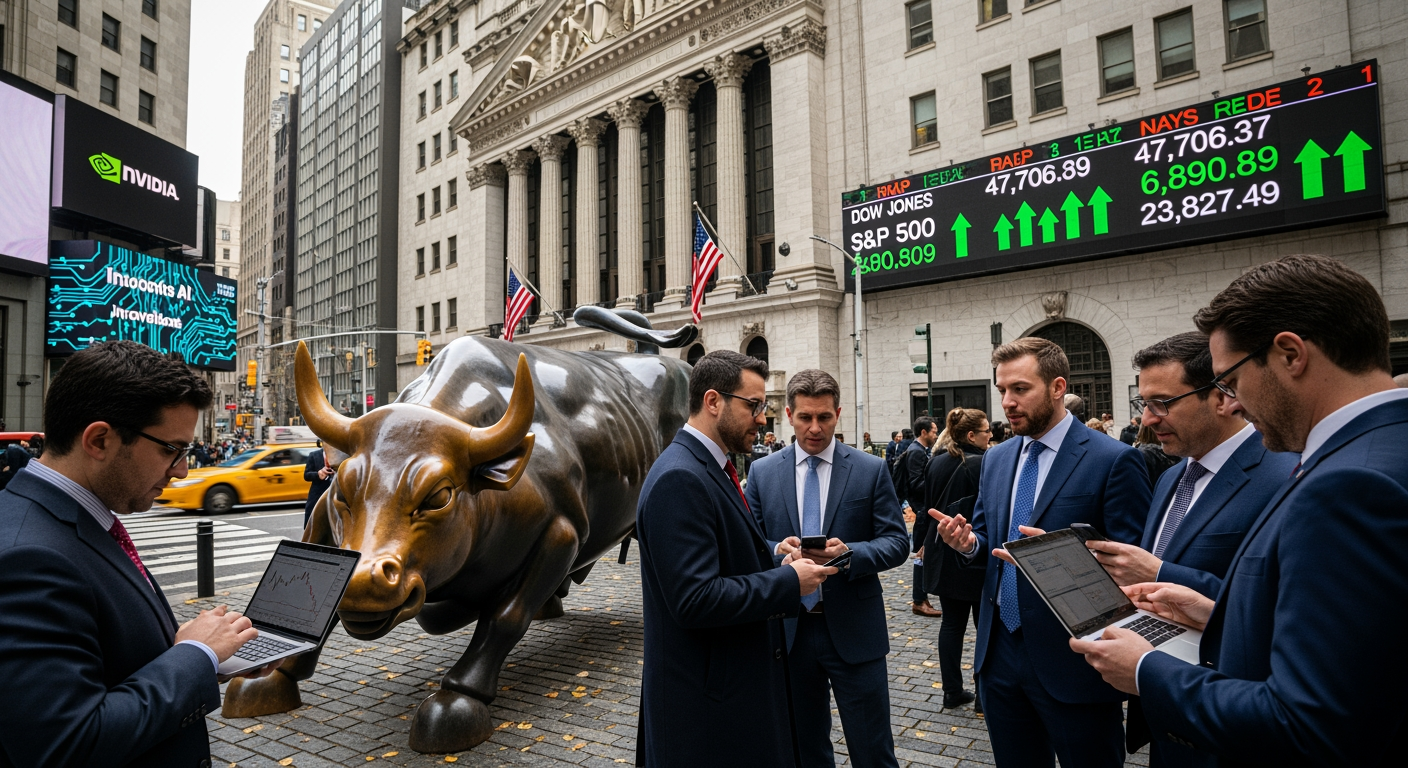
Wall Street just keeps breaking records. On the eve of a pivotal decision from the Federal Reserve (Fed) expected in the coming hours, the major US stock indices have all hit fresh all-time highs. The Dow Jones, S&P 500, and Nasdaq have each soared to new peaks, fueled by a powerful bullish momentum driven by better-than-expected corporate earnings and growing hopes for an imminent rate cut.
This surge comes as markets hang on every signal from the Fed, all while celebrating the remarkable strength of tech giants. In this optimistic climate, volatility has temporarily subsided, but investors are already questioning how long this euphoria can last and what strategic moves to make next.
Why does this moment matter so much for global finance? What are the underlying drivers, immediate consequences, and medium-term outlook? Here’s a deep dive into a pivotal moment for the markets and the US economy.
Record-Breaking Streak: Key Numbers and Standout Stocks
Tuesday, October 28, 2025, will go down in Wall Street history. The three major US indices posted new records, riding an unprecedented wave of optimism.
This rally is all the more remarkable for being accompanied by a rare string of bullish gaps over the last three sessions, highlighting the strength of buying flows.
Tech Giants Shatter Ceilings
The indices’ performance was powered by tech heavyweights, several of which broke through symbolic thresholds:
This concentration of gains among tech behemoths underscores the outsized role of artificial intelligence and cloud computing in shaping US market growth prospects.
UPS: A Positive Surprise Outside Tech
Beyond tech, industrial names like UPS also surprised to the upside. Shares jumped 8% to $96.36, driven by quarterly results that beat expectations. While revenue declined to $21.4 billion (from $22.2 billion a year ago) and net profit fell to $1.31 billion (from $1.53 billion), both figures were well ahead of analyst consensus.
Why Is Wall Street Smashing Records?
Corporate Earnings Drive the Rally
Earnings season is in full swing, and US companies are consistently beating expectations. Tech giants like Microsoft, Alphabet, Amazon, and Meta Platforms are under the microscope, especially for their massive investments in AI and innovation. Markets are applauding revenue growth, profitability, and adaptability in a still-uncertain global economic environment.
Anticipation of a Fed Rate Cut
The second major driver of optimism is the expectation that the Fed will soon cut rates, with an announcement expected imminently. According to many analysts, the Fed is likely to lower its key rate by 25 basis points—a strong signal of support for the economy amid global uncertainty.
This anticipation is already translating into lower bond yields, higher equity valuations, and a temporary drop in volatility.
Improved Geopolitical and Trade Backdrop
Markets are also benefiting from a lull on the geopolitical and trade fronts. Talks between Washington and Beijing are being seen as constructive, especially after the announcement of a “basic consensus” on several major issues. For now, this reduces the risk of a new round of tariffs or tensions that could weigh on global trade.
The Role of AI and Tech
The rise of artificial intelligence, cloud computing, and automation continues to reshape growth prospects for US leaders. Nvidia, which recently announced $500 billion in orders for its AI chips and the construction of seven supercomputers for the US Department of Energy, is at the forefront of this revolution. Microsoft and OpenAI are also pushing the boundaries of innovation, reassuring investors about America’s ability to stay at the cutting edge of global technology.
The Fed’s Upcoming Decision: What’s at Stake for Markets?
A Closely Watched Policy Pivot
The Fed is set to announce its latest monetary policy decision in the coming hours. Markets are betting on a 25 basis point rate cut, which would ease credit conditions after a string of hikes aimed at fighting inflation. This shift would be motivated by slowing macro indicators and a desire to avoid stalling growth momentum.
For investors, such a move would have several immediate effects:
Impact on Volatility and Investment Strategies
In this climate of anticipation, volatility—as measured by the VIX (the “fear index”)—has contracted, signaling increased short-term investor confidence. However, several strategists warn that volatility could quickly return if the Fed surprises markets, either by holding rates steady or by sounding too cautious about the economic outlook.
For portfolio managers, the balancing act between growth stocks (especially tech) and cyclical or defensive names remains crucial. Many investors are taking advantage of record highs to lock in some gains, while others are betting the rally will continue as long as monetary policy remains accommodative.
Companies and Sectors to Watch
Beyond the tech giants, other sectors could benefit from a monetary policy pivot:
Underlying Risks: Bubble or Market Logic?
Extreme Concentration in Tech
While the current momentum is impressive, it’s also raising questions. The combined market cap of Microsoft, Apple, and Nvidia has reached historic levels—sometimes exceeding the GDP of entire countries. This market concentration raises concerns about overreliance on a handful of players.
If tech were to reverse, the correction could be sharp, especially since valuations in some cases look stretched compared to historical ratios.
Macroeconomic Uncertainties
Despite the prevailing optimism, some macro signals warrant caution:
The Monetary Policy Debate
The Fed is walking a tightrope: move too late and risk choking off growth; move too soon and risk reigniting inflation. Markets, euphoric in the short term, could quickly punish any misstep—as seen in previous rate cycles.
What’s Next for Investors?
Short-Term Strategies: Caution and Selectivity
With markets at record highs, two main approaches are emerging:
The environment remains favorable for equities, but selectivity and risk management are back in focus.
Medium-Term Outlook: Betting on Structural Growth
Mega-trends like artificial intelligence, the energy transition, and digitalization are expected to keep driving US market growth. Savvy investors are maintaining a balanced exposure between innovation leaders and classic sectors that are in recovery mode.
Key Signals to Watch
Over the coming months, three factors will be critical:
Conclusion: Wall Street at a Crossroads
This moment marks a turning point for Wall Street and the US economy. The historic highs in the indices, powered by tech and the anticipation of a monetary pivot, reflect renewed confidence in America’s ability to remain the engine of global growth. But this euphoria comes with structural risks that can’t be ignored: concentrated performance, lofty valuations, and macro and geopolitical uncertainties.
For both retail and professional investors, agility and vigilance are key. Riding the bullish wave makes sense—but not at the expense of diversification and adapting strategy to an environment that remains, by nature, uncertain.
Wall Street is celebrating its records today, but all eyes remain on the Fed and the next challenges facing a rapidly evolving global economy.
---
❓ FAQ - Frequently Asked Questions
1. What just happened on Wall Street, in simple terms?
The three major U.S. stock indices—the Dow Jones, S&P 500, and Nasdaq—closed at fresh all-time highs on October 28, 2025. This rally reflects strong investor optimism fueled by better-than-expected corporate earnings, powerful momentum in large technology stocks, and growing expectations that the Federal Reserve will soon cut interest rates. Volatility has temporarily eased as markets await the Fed’s decision, and hopes for a supportive policy shift are lifting valuations. Tech giants, buoyed by advances in artificial intelligence and cloud computing, are leading the surge. While the tone is upbeat, investors are also weighing how long the euphoria can last and what strategies make sense at these levels.
2. Which indices hit records and what were the key numbers?
All three major indices notched new records. The Dow Jones climbed 0.34% to 47,706.37, nearing an intraday peak of 47,943. The S&P 500 added 0.23% to 6,890.89 after touching 6,911. The Nasdaq Composite led with a 0.80% jump to 23,827.49. Notably, the market has seen a rare string of bullish gaps over the last three sessions, underscoring strong buying flows and momentum behind the move.
3. What is driving the rally right now?
Three forces stand out: first, corporate earnings are broadly beating expectations, especially among major tech names investing heavily in AI and innovation. Second, markets anticipate an imminent 25-basis-point rate cut from the Federal Reserve, which is already feeding into lower bond yields, higher equity valuations, and a dip in volatility. Third, the geopolitical and trade backdrop has improved, with Washington–Beijing talks yielding a “basic consensus” on key issues, reducing near-term trade tension risks. Overlaying all of this is the structural impact of AI, cloud computing, and automation on growth prospects.
4. What is a Fed rate cut and how could it affect markets?
Markets expect the Fed to cut its policy rate by 25 basis points, easing credit conditions after prior hikes to combat inflation. If delivered, immediate effects could include lower bond yields (making stocks more attractive versus risk-free assets), stronger credit demand, and support for consumer spending. A weaker U.S. dollar could also help exports. However, strategists caution that volatility could return if the Fed surprises by holding rates steady or strikes a cautious tone on the outlook. In short, a cut would signal support for growth, but market reactions will hinge on the Fed’s message and guidance.
5. What does volatility—and the VIX—tell us about this market?
Volatility, often captured by the VIX (the “fear index”), has contracted as investors price a supportive Fed move and celebrate strong earnings. This suggests short-term confidence. But the article warns that volatility could quickly return if the Fed deviates from expectations—either by not cutting rates or by sounding wary about the economy. In other words, lower volatility reflects current optimism, but it remains contingent on policy signals and evolving macro data.
6. How are tech giants and AI shaping this rally?
Tech leaders are central to the move. Microsoft rose 2% to a record $4.03 trillion market cap, buoyed by an expanded partnership with OpenAI and a larger 27% stake. Apple crossed the $4 trillion mark after recent gains. Nvidia jumped 5%, breaking above $200 per share, with a market cap of $4.7 trillion. Nvidia also announced $500 billion in orders for its AI chips and plans to build seven supercomputers for the U.S. Department of Energy. These developments highlight how AI, cloud computing, and automation are shaping growth narratives and investor confidence.
7. Are there notable moves outside tech?
Yes. UPS surged 8% to $96.36 after quarterly results beat expectations, even though revenue fell to $21.4 billion (from $22.2 billion) and net profit declined to $1.31 billion (from $1.53 billion). Beyond single names, several sectors could benefit if monetary policy turns more accommodative: financials (often supported by credit dynamics), export-oriented industrials (helped by a weaker dollar), and cyclical sectors like autos or consumer discretionary (tied to domestic demand).
8. What are the main risks—are we in a bubble?
The article flags several risks. First, performance is highly concentrated in a few tech giants—Microsoft, Apple, and Nvidia—whose combined market caps are historically large, raising overreliance concerns. If tech reverses, the pullback could be sharp, especially given valuations that look stretched versus historical norms. Second, macro uncertainties persist: slowing global growth (notably in China and Europe), lingering inflation pressures on some goods and services, and geopolitical risks (Ukraine, Taiwan, Middle East) that could reignite volatility. Third, the Fed faces a delicate balance: moving too late risks hurting growth, while moving too soon risks rekindling inflation.
9. What should investors consider doing at record highs?
The article outlines two near-term approaches. One is to take partial profits to lock in gains. The other is to rotate toward undervalued areas, particularly industrials, financials, and cyclical consumer sectors. With the backdrop still favorable to equities, selectivity and risk management are emphasized. Some investors are also balancing growth exposure (especially in tech) with cyclical or defensive names, recognizing that market leadership could broaden or shift depending on policy and macro signals.
10. What’s the medium-term outlook highlighted here?
Structural growth themes—artificial intelligence, the energy transition, and digitalization—are expected to keep supporting U.S. markets. The article suggests maintaining balanced exposure between innovation leaders and classic sectors that are in recovery mode. While sentiment is buoyant, the path forward still depends on earnings resilience, policy navigation by the Fed, and the broader macro-geopolitical context.
11. Which signals should investors watch next?
Three signals stand out: the Fed’s next moves and the trajectory of the rate cycle; the durability of corporate earnings, especially beyond the tech sector; and geopolitical stability, given its potential to quickly bring back volatility. These factors will likely shape market leadership, risk appetite, and the sustainability of current valuations.