US Growth Outlook Upgraded for 2026: AI and Economic Resilience Are Shaping the Future
Once again, the US economy is surprising analysts. After months of concern over a potential slowdown, HSBC economists have significantly raised their growth forecast for 2026—from 1.3% to 1.7%. This upgrade comes amid a complex economic backdrop marked by trade tensions, Federal Reserve rate cuts, and, most notably, massive investments in artificial intelligence that are fundamentally transforming the American economic landscape.
This positive shift stands in stark contrast to the prevailing pessimism at the start of 2025, when tariffs and geopolitical uncertainty fueled fears of a prolonged downturn. Today, economic indicators have rebounded from their April lows, and even the World Bank revised its forecasts upward as early as last August. This momentum is restoring investor confidence and reshaping the outlook for financial markets.
The turnaround is all the more striking given that, until recently, forecasts suggested Europe would outpace the US in growth by 2026. That scenario now seems outdated, as the world’s largest economy once again demonstrates its ability to deliver positive surprises.
Artificial Intelligence: The Engine of a New Growth Dynamic
Unprecedented Investment
The results from the first half of 2025 have confirmed the scale of investment programs launched by US tech giants in artificial intelligence. These financial commitments, totaling hundreds of billions of dollars, are far more than a simple tech bet—they are a true catalyst for the entire US economy.
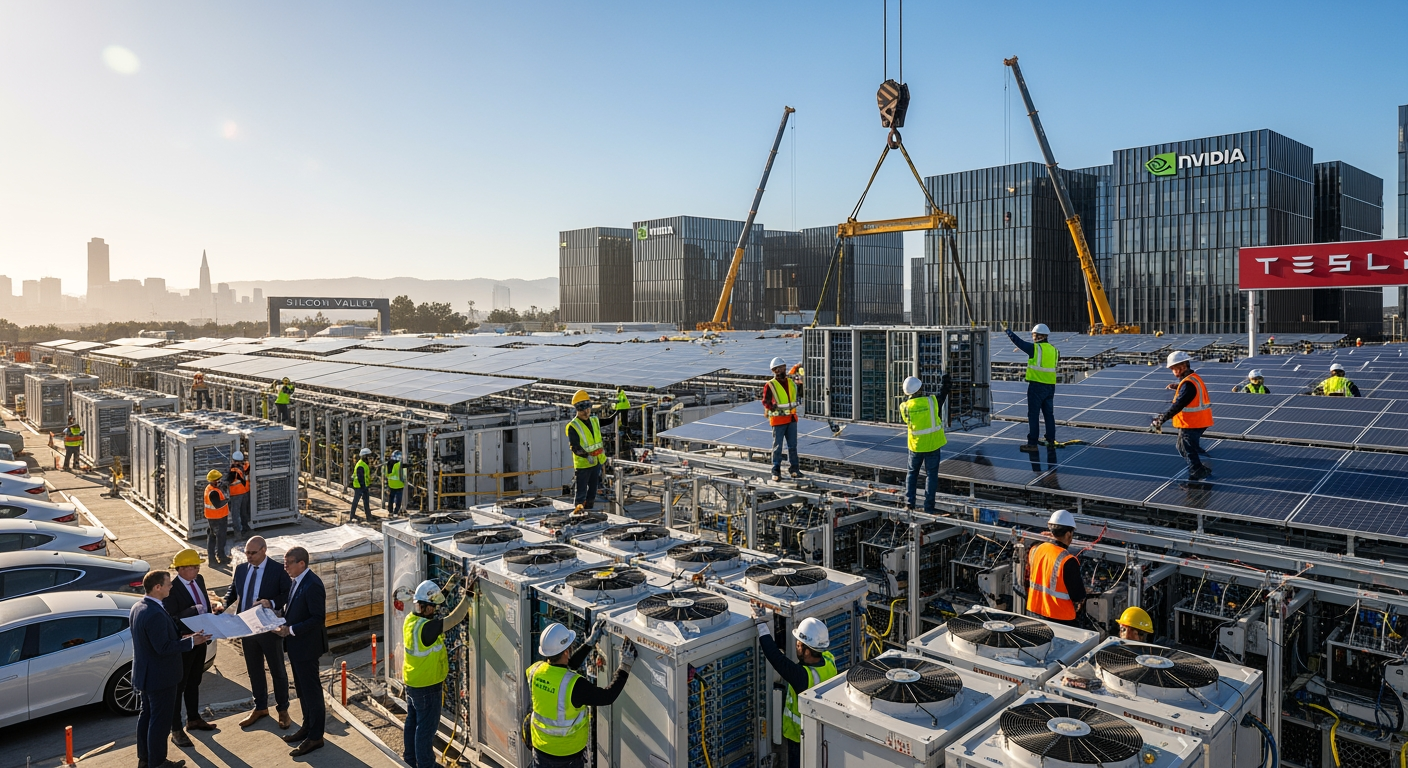
These massive investments are fueling a wide range of related sectors, from data center construction and semiconductor manufacturing to the development of energy infrastructure tailored to the soaring demand for computing power. This creates a virtuous cycle of innovation and growth that extends well beyond the tech sector alone.
Tangible Economic Impact
The ripple effects of these investments are already visible in the economic data. The creation of skilled jobs, modernization of infrastructure, and emergence of new AI-driven services are directly contributing to the upward revision in growth prospects. US companies—whether directly involved in AI development or integrating these technologies into their operations—are gaining a stronger competitive edge on the global stage.
This technological transformation is also driving productivity gains, a key factor for sustainable, non-inflationary growth. The efficiency improvements enabled by AI allow companies to optimize costs while developing new growth drivers.
Economic Resilience That Defies Expectations
Activity Indicators Rebound
After hitting a low point in April 2025, US economic indicators have staged a significant recovery. This improvement spans all sectors, highlighting the US economy’s ability to absorb shocks and reinvent itself. Household spending remains solid, supported by a labor market that, despite some mixed signals, is still broadly robust.
American businesses have shown a remarkable ability to adapt to the commercial and geopolitical challenges of 2025. Diversifying supply chains, strategically reshoring certain activities, and ongoing innovation have all helped sustain positive momentum.
Tariffs’ Limited Impact
One of the positive surprises of summer 2025 has been the ultimately limited impact of tariffs on US business activity. According to a Factset study, only 9% of US companies expect these measures to have a very negative effect on their operations—a surprisingly low figure explained by several factors.
On one hand, tariffs are generating new tax revenues that help maintain corporate tax cuts, providing a favorable fiscal balance for businesses. On the other, the trade concessions secured by the US from its partners are directly boosting activity in strategic sectors like energy, aerospace, defense, and agriculture.
This dynamic illustrates the US administration’s ability to turn protectionist measures into development opportunities for domestic companies, creating new markets that more than offset the additional import costs.
Monetary Policy as a Growth Accelerator
Strategic Rate Cuts
On September 17, 2025, the Federal Reserve implemented another 0.25% cut to its benchmark rates, continuing a cycle of monetary easing aimed at supporting economic activity. Two more cuts are expected by the end of March 2026, gradually bringing the federal funds rate into the 3.50%–3.75% range.
These rate cuts are happening in a particularly favorable context. Unlike past easing cycles, which often occurred during recessions, the current reductions are accompanying a growing economy—creating an optimal environment for risk assets.
A Prime Environment for Investment
Historically, periods of falling rates have been favorable for equities and risk assets. Lower rates naturally encourage investors to shift liquidity into higher-yielding investments as they seek to maximize returns in a declining rate environment.
This effect is especially powerful when paired with solid economic growth, as is the case now. Investors are enjoying an ideal setup: lower financing costs and improving earnings prospects. This combination largely explains the renewed optimism in financial markets since summer 2025.
A Weaker Dollar Boosts Competitiveness
Fed rate cuts are typically accompanied by a weaker dollar, and that’s exactly what we’re seeing now. This relative depreciation brings several benefits: it makes US exports more price-competitive, increases the appeal of US assets to international investors, and supports the overseas earnings of American multinationals.
Sectors Driving US Growth
Energy and Infrastructure
Recently signed trade deals are opening up new opportunities for the US energy sector. Exports of hydrocarbons—especially liquefied natural gas—are on the rise, supporting activity in producing states and generating positive spillovers throughout the industry.
The development of infrastructure needed to support AI growth and the energy transition is also creating substantial investment opportunities. Building new data centers, expanding power grids, and modernizing distribution systems are multi-year projects that will sustain growth well beyond 2026.
Aerospace and Defense
Aerospace and defense are direct beneficiaries of the trade concessions secured in tariff negotiations. International orders are piling up, strengthening the already robust order books of US manufacturers. This trend is further reinforced by a tense geopolitical climate that’s prompting many countries to bolster their defense capabilities.
Agriculture and Agribusiness
US agriculture is also reaping the rewards of new market openings. Easier access to certain foreign markets and secured purchase commitments are allowing American producers to diversify their customer base and reduce reliance on traditional markets.
Remaining Challenges
Legal Uncertainty Around Tariffs
Despite the prevailing optimism, several uncertainties remain. The Supreme Court is set to rule on the legality of the tariffs imposed by the administration. While overturning these measures might seem positive at first glance, it would actually pose a significant risk for the markets. It would sharply increase US budget imbalances and undermine the fiscal framework that has enabled ongoing corporate tax cuts.
Tensions Over Fed Independence
The independence of the Federal Reserve is a crucial issue for investors. The ongoing standoff between the Trump administration and the Fed is raising legitimate concerns about the central bank’s ability to conduct monetary policy autonomously. Any challenge to this independence could negatively impact the credibility of US monetary policy and erode market confidence.
Questions Surrounding the Labor Market
The labor market is sending mixed signals that warrant close attention. There’s a slight uptick in unemployment and lingering uncertainty about the true number of jobs being created. The impact of measures aimed at curbing illegal immigration on labor availability in certain sectors is also difficult to assess precisely.
These labor market uncertainties are a key area to watch, as employment remains the main driver of US household spending—and, by extension, overall economic growth.
Implications for Investors
A Favorable Backdrop for Equities
The upward revision in growth forecasts, combined with ongoing rate cuts, is creating a particularly attractive environment for equity investment. US markets—which now account for nearly 70% of the MSCI World Index, up from about 50% a few years ago—should continue to draw international capital.
Tech sectors, especially those linked to artificial intelligence, offer strong long-term structural growth prospects. Companies that successfully monetize their AI investments are likely to see valuations supported by improved profitability outlooks.
High-Quality Bonds Regain Their Appeal
Falling rates are also making high-quality bonds more attractive. Investors can now seek yield and preserve capital in an environment where recession risks appear to be receding. Top-tier corporate bonds offer attractive returns while benefiting from a supportive economic backdrop that limits default risk.
Diversification Remains Essential
Despite the prevailing optimism, diversification remains a golden rule for investors. Political and legal risks persist, and volatility could remain elevated in the coming months. A balanced allocation across equities, bonds, and alternative assets is the best way to navigate this complex environment.
Outlook and Conclusion
The upward revision of US growth to 1.7% for 2026 marks a major turning point in perceptions of the American economy. After months of uncertainty, the world’s largest economy is once again demonstrating its resilience and capacity for innovation. Massive investment in artificial intelligence isn’t just a technological revolution—it’s a true engine of economic growth whose effects will be felt for years to come.
The convergence of favorable factors—rate cuts, AI investment, resilient consumer spending, and trade concessions—has created a particularly supportive environment for US markets. This setup justifies the measured optimism currently seen among investors and economists.
Still, caution is warranted. Legal uncertainties around tariffs, political tensions over Fed independence, and conflicting labor market signals are reminders that the economy is operating in a complex environment. The coming months will be crucial in confirming or challenging this positive trajectory.
In this context, investors would be wise to maintain a balanced approach—taking advantage of the opportunities offered by US growth while keeping their portfolios prudently diversified. The US economy has proven its ability to deliver positive surprises; now it must turn these optimistic forecasts into concrete results to sustain renewed market confidence.
---
❓ FAQ - Frequently Asked Questions
1. What changed in the US growth outlook for 2026?
HSBC economists upgraded their US growth forecast for 2026 from 1.3% to 1.7%. This marks a clear shift from the pessimism at the start of 2025, when tariffs and geopolitical uncertainty had led many to fear a prolonged downturn. Since then, economic indicators have rebounded from their April 2025 lows, investor confidence has improved, and even the World Bank raised its outlook as early as last August. The upgrade reflects several supportive forces highlighted in the article: massive investment in artificial intelligence, strategic Federal Reserve rate cuts, resilient household spending, and trade concessions that are boosting activity in key sectors. Together, these factors have reshaped expectations and positioned the US to outperform earlier projections that once had Europe leading by 2026—a scenario the article now considers outdated.
2. How is artificial intelligence driving US economic growth?
AI is described as the engine of a new growth dynamic. US tech giants have launched investment programs totaling hundreds of billions of dollars. These outlays extend well beyond software: they are catalyzing data center construction, semiconductor production, and energy infrastructure built to meet soaring computing needs. The effects are already visible—creation of skilled jobs, modernization of infrastructure, and the emergence of AI-driven services. Crucially, AI is lifting productivity, allowing companies to become more efficient and competitive without stoking inflation. Firms directly developing AI and those integrating it into operations are gaining a global edge. This broad, virtuous cycle of innovation and spillovers is a key reason behind the upward revision in growth prospects.
3. What do “hundreds of billions” in AI investments mean in practice?
The article links these massive sums to concrete, economy-wide projects. Money is flowing into building data centers, expanding semiconductor manufacturing capacity, and upgrading energy infrastructure to power high-performance computing. This supports multi-year construction and equipment cycles, mobilizes skilled labor, and modernizes critical systems. The ripple effects include new AI-driven services, productivity gains that help companies control costs, and a stronger competitive position for US firms globally. Importantly, the benefits are not limited to big tech: related industries—from energy and utilities to construction and advanced manufacturing—are seeing activity and demand supported by AI’s infrastructure needs.
4. Why have tariffs had a limited impact on US businesses so far?
According to a Factset study cited in the article, only 9% of US companies expect tariffs to have a very negative effect on their operations. The article explains this resilience through two channels. First, tariffs are generating tax revenues that help maintain corporate tax cuts, creating a favorable fiscal balance for businesses. Second, trade concessions secured by the US are directly boosting activity in strategic sectors such as energy, aerospace, defense, and agriculture. In effect, protectionist measures have been paired with policies that open or expand markets for domestic firms, creating new opportunities that more than offset added import costs for many companies.
5. How have US activity indicators evolved since April 2025?
After bottoming in April 2025, US economic indicators have rebounded across sectors, showcasing the economy’s capacity to absorb shocks and adapt. Household spending remains solid, supported by a labor market that, while showing some mixed signals, is broadly robust. Businesses have responded to 2025’s commercial and geopolitical challenges by diversifying supply chains, reshoring certain activities, and continuing to innovate. This adaptability has underpinned the improvement in data and contributed to the more optimistic growth outlook described in the article.
6. What is the Federal Reserve doing, and why does it matter for markets?
On September 17, 2025, the Federal Reserve cut its benchmark rate by 0.25%, continuing a monetary easing cycle intended to support activity. Two more cuts are expected by the end of March 2026, which would bring the federal funds rate into the 3.50%–3.75% range. Unlike many past easing cycles that coincided with recessions, these cuts are occurring alongside growth. Historically, falling rates encourage investors to move into higher-yielding risk assets and lower financing costs for companies. Paired with improving earnings prospects, this creates what the article calls an ideal setup for equities and other risk assets.
7. How does a weaker dollar affect the US outlook?
The article notes that Fed rate cuts are typically accompanied by a weaker dollar, which is now occurring. A softer dollar brings several advantages: it makes US exports more price-competitive abroad, increases the attractiveness of US assets to international investors, and supports the overseas earnings of American multinationals when translated back into dollars. These effects reinforce the pro-growth, pro-risk-asset environment described in the piece.
8. Which sectors are poised to benefit most from the current environment?
The article highlights three areas. Energy and infrastructure: Trade deals are opening new opportunities, with rising hydrocarbon exports—especially liquefied natural gas—and multi-year investments in data centers, power grids, and distribution systems tied to AI and the energy transition. Aerospace and defense: Trade concessions and heightened geopolitical tensions are driving international orders, bolstering already strong order books. Agriculture and agribusiness: Easier access to certain foreign markets and secured purchase commitments are helping producers diversify customers and reduce reliance on traditional markets. Together, these sectors are positioned as key contributors to US growth.
9. What are the main risks and uncertainties to watch?
Three stand out. Legal uncertainty around tariffs: A pending Supreme Court ruling could overturn current measures. While that might appear positive, the article warns it could worsen budget imbalances and undermine the fiscal framework that has sustained corporate tax cuts—potentially unsettling markets. Federal Reserve independence: Ongoing tensions between the Trump administration and the Fed could erode confidence in monetary policy if autonomy is compromised. Labor market questions: A slight uptick in unemployment and uncertainty about true job creation, including the unclear impact of measures to curb illegal immigration on labor availability, warrant close monitoring. Employment remains the key driver of household spending and overall growth.
10. What positioning does the article suggest for investors?
The piece describes a favorable backdrop for equities, supported by growth upgrades and ongoing rate cuts. US markets—now nearly 70% of the MSCI World Index, up from about 50% a few years ago—are drawing international capital. Tech areas tied to AI offer strong structural growth prospects, especially for companies that can monetize their AI investments. At the same time, high-quality bonds are regaining appeal as rates fall, offering yield and capital preservation with recession risks receding. Despite the optimism, the article stresses diversification across equities, bonds, and alternative assets to navigate political and legal risks and potential volatility.
11. Why does the article say earlier forecasts of Europe outpacing the US now look outdated?
The earlier view has been overtaken by US positive surprises. Since mid-2025, indicators have rebounded from April lows, AI investments have accelerated with economy-wide spillovers, and the Fed’s rate cuts are occurring alongside growth—an unusually supportive combination for risk assets and confidence. Trade concessions are boosting strategic sectors, while households and businesses have shown resilience and adaptability. Together, these developments have led to an upward revision of US growth to 1.7% for 2026 and a reassessment of relative prospects, rendering the prior scenario of Europe leading by 2026 outdated in the article’s view.