TSMC: Record Quarterly Profits Threatened by US Tariffs
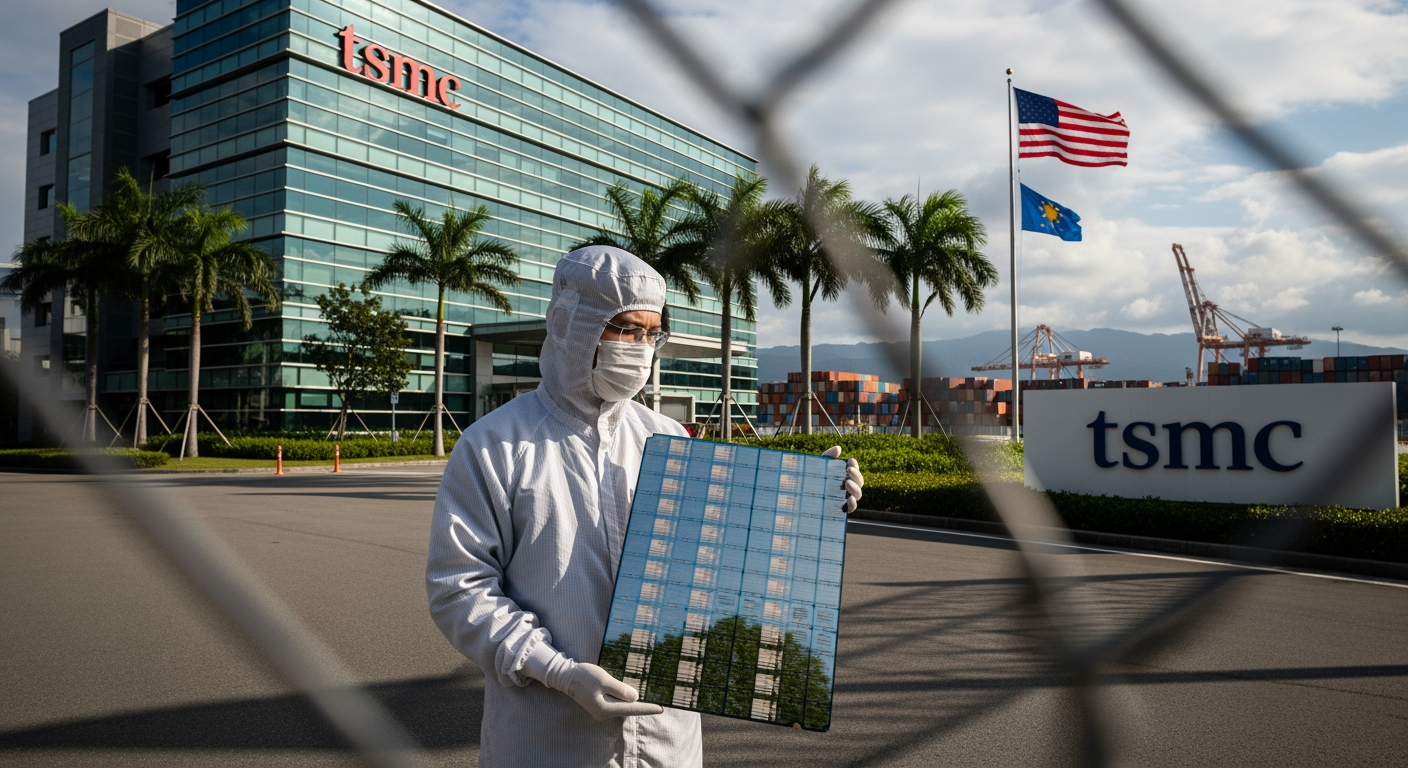
The semiconductor industry has never been more strategic than it is today. At the heart of the technological revolution, the microchip has become the new oil of the 21st century—and Taiwan Semiconductor Manufacturing Company (TSMC) is its main refinery. On Thursday, October 16, 2025, the world’s leading chip foundry announced a quarterly profit surge of 39.1%, blowing past market expectations. This historic record highlights the sector’s remarkable health, fueled by booming demand for artificial intelligence, 5G, electric vehicles, and connected devices.
But behind this financial fireworks display, a shadow looms: trade tensions between Taiwan, the United States, and China, and especially the threat of new US tariffs on Taiwanese semiconductors. These geopolitical uncertainties could slow TSMC’s growth and, by extension, disrupt the entire global tech value chain. So, what made this quarter so exceptional? What are the real risks facing TSMC and its clients? And most importantly, what does it all mean for markets, investors, and the global economy? Let’s dive into the heart of a sector in turmoil.
A Historic Quarter for TSMC
Results That Shatter Expectations
In Q3 2025, TSMC reported a net profit of $12.4 billion, up 39.1% from the same period in 2024, according to figures released Thursday and reported by Reuters. Revenue jumped 28.7% to $24.8 billion. These results, far exceeding analysts’ forecasts, are driven by sustained demand for advanced chips—especially those used in artificial intelligence, data centers, and high-end smartphones.
TSMC remains the exclusive supplier for tech giants like Apple, NVIDIA, AMD, Qualcomm, and, to a lesser extent, Intel. These companies rely almost entirely on TSMC’s Taiwanese fabs for their most advanced processors. The chip shortage that rocked the auto and electronics industries from 2021 to 2023 has given way to a race for production capacity. TSMC has capitalized on this, investing heavily in new fabs in Taiwan, as well as in the US, Japan, and Germany.Growth Fueled by AI and 5G
Artificial intelligence is now the primary driver of semiconductor demand. Data centers hosting generative AI models like ChatGPT or Gemini consume massive quantities of high-end chips. Autonomous and electric vehicles, industrial robotics, smart devices—all these sectors are pushing demand higher. 5G is also playing a crucial role: every new smartphone generation requires more powerful and energy-efficient chips. TSMC is the only player capable of mass-producing 3-nanometer (nm) processors—and soon, 2 nm—a level of miniaturization its competitors can’t match. This technological edge gives TSMC a commanding competitive advantage.US Tariffs: A Sword of Damocles
A Tense Geopolitical Backdrop
For years, relations between Taiwan, China, and the United States have been at the center of global tech concerns. Taiwan, claimed by China but governed independently, is the world’s main producer of advanced chips. The US, eager to secure its supply chains, has offered incentives for TSMC to build fabs on American soil (notably in Arizona). But, according to sources cited by Bloomberg, Washington is also considering imposing tariffs on Taiwanese semiconductors to protect domestic industry and reduce dependence.
If enacted, these tariffs could reach 15–25% on certain categories of chips, according to the Wall Street Journal. Such a move would drive up the price of electronic components, directly impacting American manufacturers of smartphones, computers, servers, and electric vehicles.Direct Impact on TSMC and Its Clients
For TSMC, the stakes are twofold: maintaining competitiveness against rivals like Samsung and Intel, and keeping balanced relationships with its American clients. If tariffs are imposed, several scenarios could play out:
According to Morgan Stanley analysts, a 20% tariff on Taiwanese chips would cut TSMC’s net profit by 8–12% over a year, all else being equal. That’s a major blow for a company with a market cap north of $600 billion.
The Ripple Effect on Tech and Global AI
A Value Chain Under Pressure
TSMC is both the weakest and strongest link in the high-tech industry. Without its chips, there’s no iPhone, no PlayStation, no Tesla Full Self-Driving, no data centers to power generative AI. Any disruption in supply or spike in costs would trigger a domino effect:Companies like Apple, Microsoft, Amazon, and Google—together accounting for over 50% of the Nasdaq’s market cap—are directly dependent on TSMC. A crisis at TSMC would be a crisis for all of Silicon Valley.
AI: The Biggest Winner… and Potential Loser
Artificial intelligence is both TSMC’s growth engine and its Achilles’ heel. AI data centers require ever more powerful chips, most of which are made by TSMC. Gartner estimates that the global AI semiconductor market will hit $120 billion in 2025—nearly double its 2022 size.But if US tariffs come into play, the cost of the intensive computing needed for AI would rise sharply. Startups and industry giants alike would have to absorb the increase or slow their expansion. In the long run, this could dampen AI adoption in sectors like industry, healthcare, finance, and transportation.
TSMC’s Strategies for Navigating Geopolitical Risks
Geographic Diversification
Aware of the risks, TSMC is accelerating its geographic diversification strategy. The company is building a mega-fab in Phoenix, Arizona, with total investment topping $40 billion. Other sites are in development in Japan (with Sony) and Germany (with Bosch and Infineon). The goal: reduce dependence on Taiwan and secure supply for Western clients.
These investments are backed by public subsidies (the US CHIPS Act, plus European and Japanese incentives), but they take time. Significant production outside Taiwan isn’t expected before 2026–2027. Until then, most output remains concentrated on the island, leaving TSMC—and its clients—exposed to heightened geopolitical risk.Technological Innovation and Strategic Alliances
TSMC is also betting on innovation to maintain its lead. The company plans to launch 2 nm production as early as 2026, a technology that will help it stay ahead of Samsung and Intel. At the same time, it’s strengthening partnerships with tech giants and governments alike to secure supply chains for raw materials (silicon, rare gases, lithography equipment). Alliances with the US are crucial. TSMC is working closely with the US Department of Defense to secure production of critical chips for national security—a way to demonstrate loyalty to Washington while protecting its commercial interests.Outlook and Trends for 2026
A Market Still Under Pressure
Demand for semiconductors is expected to remain strong in 2026, driven by AI, 5G/6G, electric vehicles, and industrial digitization. According to IDC, the global chip market could grow 12–15% annually through 2030. Thanks to its investments and technological edge, TSMC is well positioned to benefit. But geopolitical and trade risks aren’t going away. US-China rivalry, tensions over Taiwan, potential tariffs—all could slow TSMC’s growth and, by extension, the entire tech industry.What Are TSMC’s Clients’ Alternatives?
In the face of uncertainty, tech giants are exploring other options:
Conclusion: TSMC, Between Record Profits and Uncertainty
TSMC is posting spectacular results, powered by insatiable global demand for advanced semiconductors. The company is at the height of its power, but navigating choppy waters. Geopolitical tensions, the threat of US tariffs, rising competition, and the need to diversify production all weigh on its outlook.
For investors, the challenge is significant: capitalizing on the sector’s exceptional growth while anticipating political and commercial risks. For tech companies, dependence on TSMC is both a strength and a vulnerability. And for consumers, higher costs could mean more expensive products or slower innovation. One thing is certain: the semiconductor industry isn’t going anywhere. As a central player in the digital revolution, TSMC remains a key barometer for the health of the global economy. It’s definitely one to watch closely—because its fate is tied to all of ours.---
❓ FAQ - Frequently Asked Questions
1. Who is TSMC and why does it matter so much to tech?
Taiwan Semiconductor Manufacturing Company (TSMC) is the world’s leading chip foundry—the central producer of advanced microchips that power modern technology. The article likens semiconductors to the “new oil” and TSMC to the main refinery, underscoring how foundational it is to the global economy. TSMC is the exclusive supplier for many of the most advanced processors used by Apple, NVIDIA, AMD, Qualcomm, and, to a lesser extent, Intel. Its chips enable everything from high-end smartphones and data centers that run generative AI, to electric vehicles, industrial robots, and connected devices. Because so many critical products depend on TSMC’s cutting-edge manufacturing, any disruption to its output or costs can ripple through Silicon Valley and beyond—affecting product launches, innovation timelines, and consumer prices worldwide.
2. What did TSMC report for Q3 2025, and what drove the results?
For Q3 2025, TSMC reported net profit of $12.4 billion, up 39.1% year over year, and revenue of $24.8 billion, up 28.7%, far exceeding analysts’ expectations (Reuters). The surge reflects sustained demand for advanced chips, especially those used in artificial intelligence, data centers, and high-end smartphones. AI has become the primary demand driver, with data centers hosting generative AI models consuming massive quantities of high-performance semiconductors. 5G is another key catalyst, as each new smartphone generation requires more powerful and energy-efficient chips. TSMC’s unique ability to mass-produce at 3-nanometer (and soon 2 nm) gives it a technological lead competitors can’t match, reinforcing its role as the go-to manufacturer for cutting-edge processors and underpinning its record profitability.
3. What US tariffs are being considered on Taiwanese chips, and why?
According to Bloomberg and the Wall Street Journal, Washington is considering tariffs on Taiwanese semiconductors to protect domestic industry and reduce dependence on overseas supply chains. If enacted, the tariffs could reach 15–25% on certain categories of chips. The policy goal is to encourage more local manufacturing and strengthen national resilience in a strategically critical sector. However, such tariffs would raise the price of imported electronic components, directly impacting US makers of smartphones, computers, servers, and electric vehicles. The article frames these measures within broader geopolitical tensions among Taiwan, the United States, and China. While the US is offering incentives for TSMC to build fabs domestically (e.g., in Arizona), tariffs remain a potential lever policymakers could use—one that would reverberate across cost structures and supply decisions for the entire US tech ecosystem.
4. How would US tariffs affect TSMC, American tech companies, and consumers?
Tariffs would likely raise costs for US manufacturers, who may pass those increases on to consumers or seek alternatives such as partial production relocation and supplier diversification. For TSMC, tariffs would pressure margins as clients try to limit the damage through pricing negotiations. They could also accelerate TSMC’s investments outside Taiwan (in the US, Japan, and Europe) and increase support for local foundries like Intel Foundry Services. Beyond direct cost impacts, the article warns of a broader domino effect across the value chain: delayed product launches (smartphones, PCs, gaming consoles), slower innovation as companies defer R&D, and higher end-consumer prices in an already inflationary environment. Because TSMC underpins critical products and AI infrastructure, any cost shock or supply friction tied to tariffs would cascade through Silicon Valley and the global tech industry.
5. By how much could a 20% tariff reduce TSMC’s profits?
Morgan Stanley analysts estimate that a 20% tariff on Taiwanese chips would cut TSMC’s net profit by 8–12% over a year, all else being equal. For a company generating record earnings and serving as the primary supplier of cutting-edge processors, that represents a meaningful hit. The article frames this as a major risk, given TSMC’s centrality to global tech and its extensive ties to leading US clients. While TSMC is investing to diversify production geographically, such investments take time to ramp. In the near term, a tariff shock would likely force difficult pricing negotiations with customers, potential adjustments to capacity plans, and renewed urgency around building out overseas fabs to mitigate exposure.
6. Why is AI both TSMC’s biggest growth engine and a risk?
AI drives massive demand for advanced chips. Data centers running generative AI models (like ChatGPT or Gemini) require ever more powerful processors, many of which are made by TSMC. Gartner estimates the global AI semiconductor market could reach $120 billion in 2025—nearly double its 2022 size—making AI the primary growth engine for TSMC and the broader chip industry. But this success creates dependence. If US tariffs raise the cost of Taiwanese semiconductors, the expense of the intensive computing behind AI would rise sharply. Both startups and tech giants would face higher costs or slower expansion, potentially dampening AI adoption across industries such as healthcare, finance, transportation, and manufacturing. In short, AI supercharges demand for TSMC’s most advanced nodes, but policy shocks could make that growth more expensive and fragile.
7. What makes TSMC’s 3 nm (and soon 2 nm) technology so important?
TSMC is currently the only player capable of mass-producing 3-nanometer processors, with plans to launch 2 nm production as early as 2026. These designations refer to extremely advanced levels of miniaturization that competitors cannot match at scale. This technical edge delivers a commanding competitive advantage, enabling the performance and efficiency required for AI accelerators, high-end smartphones, and other demanding applications. As 5G accelerates and computing workloads grow, customers need chips that pack more capability into smaller, more efficient designs—precisely the area where TSMC leads. That leadership explains why top companies such as Apple, NVIDIA, AMD, and Qualcomm rely so heavily on TSMC’s Taiwanese fabs for their most advanced processors.
8. How exposed is the broader tech ecosystem to TSMC disruptions?
The article describes TSMC as both the weakest and strongest link in high tech. Without its chips, there’s no iPhone, no PlayStation, no Tesla Full Self-Driving, and no data centers powerful enough to run generative AI at scale. Disruptions—whether from tariffs, geopolitics, or supply constraints—would likely trigger delays in new product launches, slower innovation as companies postpone R&D, and higher prices for consumers. The stakes reach far beyond individual firms: Apple, Microsoft, Amazon, and Google—together accounting for over 50% of the Nasdaq’s market cap—depend directly on TSMC. In this sense, a crisis at TSMC would amount to a crisis for Silicon Valley and the global tech value chain.
9. What is TSMC doing to manage geopolitical risk?
TSMC is accelerating geographic diversification and deepening strategic alliances. It is building a mega-fab in Phoenix, Arizona, with total investment topping $40 billion, and developing sites in Japan (with Sony) and Germany (with Bosch and Infineon). These projects are supported by public subsidies (the US CHIPS Act and European/Japanese incentives) but require time to reach meaningful output. In parallel, TSMC is pushing technological innovation, targeting 2 nm production as early as 2026 to maintain its lead over Samsung and Intel. The company is also strengthening partnerships to secure supply chains for materials and lithography equipment. Crucially, TSMC is working closely with the US Department of Defense to ensure production of critical chips for national security—signaling alignment with Washington while protecting its commercial interests.
10. When will production outside Taiwan become meaningful?
Despite aggressive investment in the US, Japan, and Germany, the article notes that significant production outside Taiwan isn’t expected before 2026–2027. Until then, most of TSMC’s output remains concentrated on the island, leaving the company—and its customers—exposed to geopolitical and trade risks in the near term. The diversification strategy is designed to reduce dependence on Taiwan and secure supply for Western clients, but building and ramping advanced fabs is a multi-year process. As those facilities come online, TSMC aims to balance geopolitical considerations with maintaining its technological lead, ensuring critical capacity is available closer to key end markets.
11. What alternatives do TSMC’s clients have, and are they sufficient?
Clients are exploring several options: diversifying suppliers (Samsung, Intel Foundry Services, GlobalFoundries, and even Chinese startups like SMIC), investing in more in-house chip design (still outsourced to foundries), and strategic stockpiling to buffer disruptions. However, the article stresses that none of these solutions is perfect. TSMC remains, and will remain for several years, the undisputed leader in cutting-edge nodes. Its technological dominance is so strong that even higher costs would be unlikely to dethrone it in the short term. As a result, diversification can mitigate risk at the margins, but there is no true like-for-like substitute for TSMC’s most advanced manufacturing.
12. What should investors and consumers watch heading into 2026?
Demand should remain strong, driven by AI, 5G/6G, electric vehicles, and industrial digitization. According to IDC, the global chip market could grow 12–15% annually through 2030. But geopolitical risk lingers: US–China rivalry, tensions over Taiwan, and potential US tariffs on Taiwanese chips could slow growth or raise costs. Watch TSMC’s execution on geographic diversification (Arizona, Japan, Germany), its 2 nm rollout, and any policy moves on tariffs, subsidies, or national security. For consumers, higher input costs could translate into more expensive devices or slower innovation cadence. For investors, the challenge is balancing exceptional structural growth with political and commercial risks that can affect margins, capital allocation, and the pace of AI-driven adoption.