Tesla Stock Drops After Approval of Elon Musk’s $1 Trillion Compensation Plan
Introduction: When a Vote Shakes the Financial World
On November 7, 2025, the financial world held its breath. At its annual shareholder meeting, Tesla—the electric vehicle giant—approved an unprecedented compensation plan for its iconic CEO, Elon Musk. The headline figure: a potential $1 trillion payout, to be unlocked over time and tied to ambitious performance targets. It’s a staggering sum, unmatched in the history of modern capitalism.
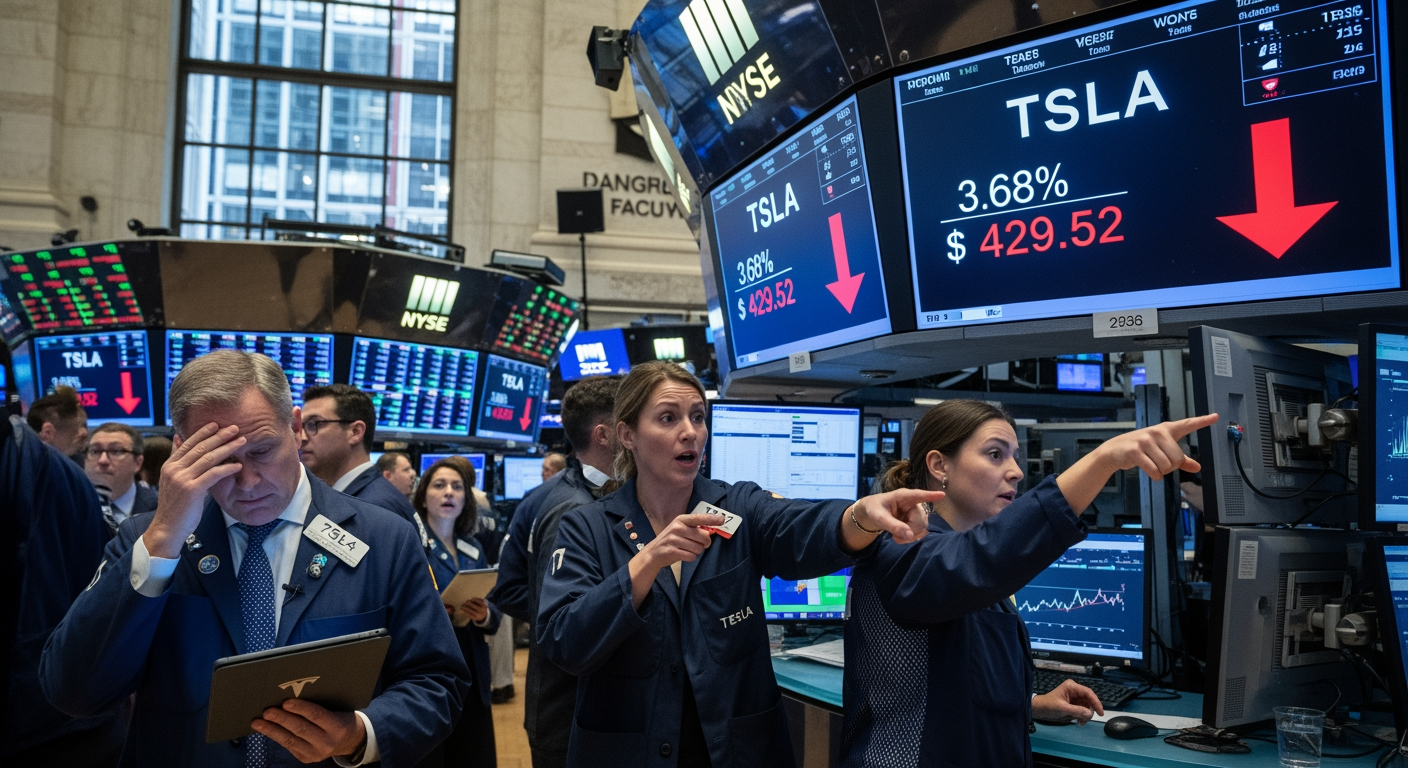
But the market’s reaction was swift. The day after the decision, Tesla shares fell 3.68%, closing at $429.52, even as the broader tech sector remained relatively stable. This sudden drop was anything but trivial, immediately reigniting debates about Tesla’s governance, valuation, and the broader issue of executive pay in the tech industry. The move is all the more symbolic given the current climate, where investors and regulators are increasingly concerned about the concentration of power among “tech titans.”
Why did this plan send such shockwaves through the market? What does it mean for Tesla, its shareholders, and the tech sector as a whole? Let’s dive into a story that goes far beyond just the stock market, shedding light on the stakes of a truly historic decision.
An Unprecedented Compensation Plan: The Numbers and the Fine Print
Inside Elon Musk’s “Giga-Package”
The plan, approved by over 75% of Tesla shareholders, could see Elon Musk receive up to $1 trillion in stock—provided he meets a series of extremely ambitious financial and market-based milestones. The structure is spread over several years and is tied to both market capitalization and operational performance thresholds.
Here’s how it breaks down:
According to multiple financial sources, if Musk were to unlock the full package, he would become the world’s first modern “trillionaire”—a prospect that fascinates and worries market watchers in equal measure.
A Controversial but Decisive Vote
The resolution passed at the annual meeting was hotly debated. Major corporate governance players, like Institutional Shareholder Services (ISS) and Norway’s sovereign wealth fund Norges Bank, opposed the plan, citing “an excessive amount, a dilutive effect on existing shareholders, and increased dependence on a single individual.” Their warnings went unheeded, as the majority of shareholders felt retaining Elon Musk was critical to Tesla’s future trajectory.
Still, the approval sends a strong message to Wall Street and the tech sector: the personality and vision of a single leader can justify outsize compensation, even if it means upending traditional governance standards.
Immediate Market Reaction: A Stock Market Wake-Up Call
A Drop That Raises Questions
The day after the vote, Tesla shares took a significant hit, even as other tech stocks held steady. This market reaction reflects several concerns:
At the opening bell, Tesla dropped 2.5%, with losses deepening throughout the session. Analysts at TradingSat and Zonebourse noted that the correction reflects “increased investor caution about Tesla’s ability to sustain growth in an increasingly competitive environment.”
Technical Analysis: Where Is Tesla’s Stock Headed?
According to the latest data from ProRealTime and Café de la Bourse, Tesla shares hit a low around $215 in April, then rebounded before hitting resistance at $365. The post-meeting drop brought the stock back to around $430, but volatility remains high.
Experts see the next major resistance level at around $480, but say the trend remains fragile until investor confidence is restored. Some argue the current correction is part of a broader revaluation of growth stocks, as high interest rates push investors to focus on stricter fundamentals.
Governance and Image: Tesla’s Contradictions on Display
Elon Musk’s Power: Strength or Weakness?
Tesla’s record-breaking compensation plan spotlights a deeper debate about governance at major tech companies. On one hand, supporters point to the incredible value Musk has created since taking the helm—turning Tesla from a visionary startup into the undisputed leader in electric vehicles and a key player in automotive AI.
On the other hand, critics warn of the dangers of “personalized” governance, with extreme dependence on one individual’s vision and personality. Norges Bank, a major shareholder, voiced concerns about “the lack of measures to mitigate the risk of relying on a single person.” ISS also highlighted the “dilutive effect” and the risk of misalignment between management and minority shareholders.
This tension between innovation driven by a larger-than-life personality and the need for balanced governance is emblematic of the challenges facing the tech sector today.
A Signal for the Tech Industry
Tesla’s decision sets a new precedent. It raises the question of how much a “star CEO” is worth to shareholders and whether their value justifies such massive payouts. Big tech companies—from Google to Meta to Apple—are watching closely to see how the market digests this kind of package, especially as social and regulatory scrutiny of executive pay intensifies.
Regulators are also paying attention, as the concentration of power in tech giants continues to worry US and European authorities.
Why the Skepticism? Economic Headwinds and Fierce Competition
Fundamentals Under Pressure
Tesla’s stock drop isn’t just about the compensation plan. Since the start of 2025, the company has faced a tougher environment:
In this climate, investors are punishing even minor disappointments more harshly, which explains the heightened volatility in Tesla shares.
A Tense Political Environment
Elon Musk’s polarizing, high-profile persona adds another layer of uncertainty. His public statements—often far removed from economic issues—fuel constant volatility in the stock. The ongoing public spat between Musk and Donald Trump, set against a backdrop of trade tensions and political differences, also adds to the sense of instability around Tesla.
Ripple Effects Across Tech and Global Finance
Domino Effect in Tech
Tesla’s situation goes far beyond the company itself. It’s reigniting debate over executive compensation in tech and the market’s ability to “price in” long-term innovation and risk. Several analysts believe this decision could:
Public Perception and Social Issues
The approval of such a massive compensation plan comes at a time when income inequality and value-sharing are hot-button issues in public debate. Many voices—including civil society groups and minority shareholder associations—are calling out the “outrageous gap” between CEO pay and that of employees or even other top US executives.
This polarization could further fuel skepticism toward “American-style” capitalism, as rising inequality remains a major concern for the public.
Looking Ahead: Tesla at a Crossroads
What’s Next for Tesla Stock?
In the short term, volatility is likely to remain high. Markets are now looking for concrete signs that Tesla can reignite growth and defend its margins, especially against Chinese competitors and a slowing US market. Several analysts believe the $480 level will be key in determining whether the stock rebounds or continues downward.
In the medium term, whether Musk achieves the plan’s targets will depend on Tesla’s ability to innovate in AI-powered mobility, expand its product lineup, and strengthen its global footprint.
A Test for Corporate Governance
Tesla’s decision now serves as a real-world “stress test” for governance at major public companies. It raises the question of how to balance retaining exceptional talent, creating value for all shareholders, and upholding good governance standards.
If Tesla delivers on its promises for growth and innovation, shareholders’ gamble will have paid off. If not, expect mounting criticism of an overly personalized management model at the expense of the stability and predictability investors crave.
Conclusion: A Powerful Signal with Far-Reaching Consequences
The approval of Elon Musk’s $1 trillion compensation plan marks a turning point in the history of finance and corporate governance. While it cements the central role of “visionaries” in driving the global tech sector, it also exposes the limits of a model where power is highly concentrated and leadership is deeply personalized—potentially undermining investor confidence.
The coming months will be critical for Tesla, both operationally and in the markets. More broadly, this story is already shaping how markets, companies, and society at large view leadership, governance, and the sharing of wealth in the 21st-century economy.
---
❓ FAQ - Frequently Asked Questions
1. What exactly did Tesla shareholders approve?
At its November 7, 2025 annual meeting, Tesla shareholders approved a performance-based compensation plan that could grant Elon Musk up to $1 trillion in stock over time. More than 75% of shareholders backed the plan. Payouts are tied to a series of ambitious milestones spanning market capitalization and operational performance. The first tranche vests if Tesla reaches a $2 trillion market cap, and the final tranche requires an unprecedented $8.5 trillion market cap. If fully achieved, Musk could end up controlling as much as 25% of Tesla’s shares, further concentrating influence over the company’s direction. The plan’s size and structure are without precedent in modern corporate history.
2. Why did Tesla’s stock fall after the plan was approved?
The day after the vote, Tesla shares fell 3.68% to $429.52. The drop reflected concerns over potential share dilution (issuing large amounts of stock to Musk), governance risks from concentrating power in a single individual, and a possible misalignment between the CEO’s incentives and minority shareholders’ interests. Analysts also cited “increased investor caution” about Tesla’s ability to sustain growth in a tougher competitive environment. In short, while the plan aims to retain Musk, the market signaled unease about its implications for existing shareholders and the balance of decision-making.
3. What is “market capitalization,” and why are $2T and $8.5T important?
Market capitalization (market cap) is the total value of a company’s outstanding shares (share price multiplied by the number of shares). Tesla’s compensation plan uses market cap milestones to trigger payouts. The first tranche requires Tesla to reach a $2 trillion market cap, while the final tranche demands $8.5 trillion—a level no public company has ever reached. These thresholds are central to the plan because they tie Musk’s potential payout to substantial, measurable increases in Tesla’s overall market value.
4. What is share dilution and how could this plan dilute existing shareholders?
Share dilution occurs when a company issues new shares, reducing the ownership percentage of existing shareholders. Tesla’s plan involves granting a massive amount of stock to Elon Musk if targets are hit. That new issuance would increase the total share count, shrinking current investors’ relative stakes and potentially their voting influence. This “dilutive effect” was a key reason some governance advisors opposed the plan, as it can weaken the proportional claim of existing shareholders on future earnings and control.
5. How unprecedented is a $1 trillion CEO compensation plan?
It is unparalleled. The article describes the package as unmatched in modern capitalism. If fully realized, it could make Elon Musk the first modern “trillionaire.” The size and conditions set a new precedent for executive pay, signaling that markets may accept outsized compensation to retain a “star CEO,” even when it challenges traditional governance norms.
6. Who opposed the plan and why?
Institutional Shareholder Services (ISS) and Norway’s sovereign wealth fund, Norges Bank, both opposed the plan. They cited three main concerns: the excessive size of the award, its dilutive impact on existing shareholders, and the risks of increasing dependence on a single individual for company leadership and strategy. Despite these warnings, a large majority of shareholders approved the plan, prioritizing Musk’s retention and perceived value creation.
7. What technical levels are analysts watching for Tesla’s stock?
Technical commentary referenced a low near $215 in April, a rebound, and prior resistance around $365. After the meeting, the stock traded around $430, with volatility still high. Experts highlighted approximately $480 as the next major resistance level. They consider the trend fragile until investor confidence returns. In technical analysis, a resistance level is a price area where selling pressure tends to emerge, potentially halting or reversing an advance.
8. Beyond the pay package, what factors are pressuring Tesla’s stock?
Several fundamentals are weighing on sentiment: falling sales with several consecutive quarters of declining deliveries; margin pressure from repeated price cuts to counter competition; intense rivalry in China, where local players like BYD are eroding Tesla’s market share; and a tough macro backdrop with high Federal Reserve interest rates that depress valuations of growth stocks. Additionally, renewed trade tensions under President Donald Trump and Elon Musk’s polarizing public profile contribute to heightened volatility.
9. How does concentrating power in Elon Musk affect Tesla’s governance?
Supporters argue Musk’s leadership has created immense value, transforming Tesla into the EV leader and a key player in automotive AI. Critics counter that “personalized” governance—heavy reliance on one individual—introduces risks, including potential misalignment with minority shareholders and vulnerability if that leader falters. Norges Bank flagged the lack of mitigating measures against single-person dependence, while ISS stressed dilution and alignment risks. The plan magnifies this debate by potentially increasing Musk’s control to as much as 25%.
10. What are the broader implications for the tech sector and regulation?
Tesla’s move could prompt other tech firms to raise executive pay to retain top talent, intensify scrutiny from institutional investors on governance, and accelerate regulatory discussions about power concentration and the role of founder-CEOs. The decision also intersects with public concerns about income inequality, potentially widening debates over value-sharing between executives and employees. Regulators in the U.S. and Europe are watching as tech giants’ influence and leadership models draw greater attention.
11. What should investors watch in the coming months?
Expect elevated volatility. Markets want concrete signs that Tesla can reignite growth and defend margins amid Chinese competition and a slowing U.S. market. Technically, analysts view the ~$480 level as pivotal for gauging a potential rebound versus continued weakness. Medium term, the plan’s feasibility hinges on Tesla’s execution in AI-powered mobility, expanding its product lineup, and strengthening its global footprint. Governance outcomes will also be a key test: balancing extraordinary leadership with structures that protect all shareholders.