Record Highs on US Markets and a US-China Trade Truce
Introduction: A Wave of Optimism Sweeps Global Markets
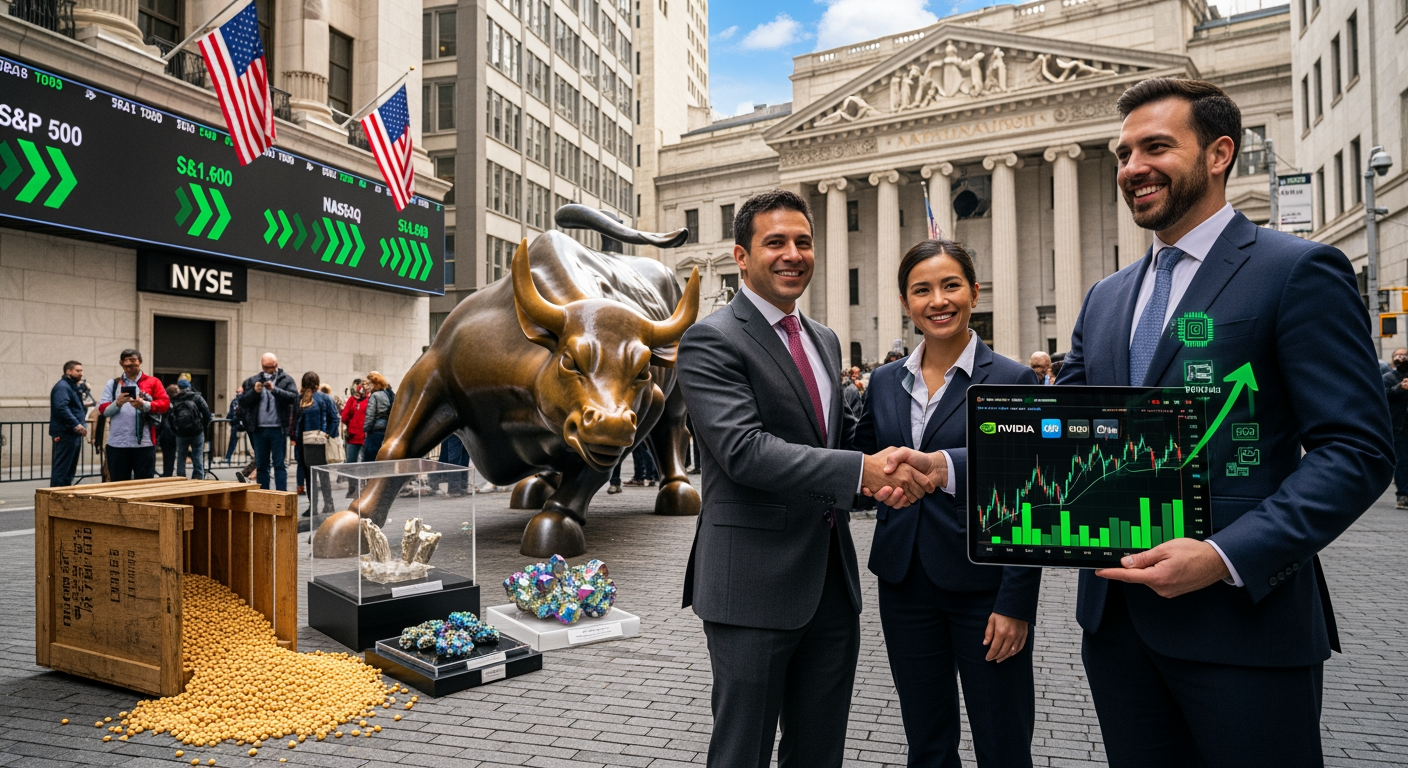
In recent weeks, financial markets have been driven by a red-hot topic: the prospect of a trade truce between the United States and China. Even though this détente remains fragile, its impact has been immediate and striking—Wall Street and major European exchanges have surged to new record highs, fueled by renewed investor confidence. With volatility easing and economic outlooks looking brighter, tech and banking stocks in particular are thriving in this calmer environment.
But why does the mere hint of easing tensions between Washington and Beijing have such a dramatic effect on the markets? Which sectors stand to gain the most? And what does this mean for investors and the global economy going forward? Here’s an in-depth look at a pivotal moment for international finance.
Toward a Trade Truce: The Context Behind a Long-Awaited Deal
Intense Negotiations After Months of Tension
Since fall 2025, US-China relations have once again been on a rollercoaster. In October, Beijing ramped up its stance by tightening controls on exports of rare earths—critical raw materials for the global tech industry. In response, the Trump administration threatened to double tariffs on Chinese imports, stoking fears of an endless escalation.
Under pressure from the markets and mounting economic uncertainty, the world’s two largest economies returned to the negotiating table. By late October in Kuala Lumpur, American and Chinese negotiators finally reached the framework for a truce, paving the way for a crucial meeting between Donald Trump and Xi Jinping, scheduled for October 30 at the ASEAN summit. According to Le Monde, US Treasury Secretary Scott Bessent described the talks as “constructive, broad, and deep,” while China’s Xinhua news agency spoke of a “basic consensus” on de-escalating the trade conflict.
Key Points of the Truce
According to reports from Le Figaro and La Croix, the truce framework covers several sensitive areas:
While nothing is officially signed yet and uncertainty remains about the final scope of the deal, this de-escalation alone has been enough to restore confidence among global investors.
Equities at All-Time Highs: The Immediate Impact of the Truce
Wall Street: Record Highs on Relief
News of the truce acted as a true catalyst for Wall Street. The S&P 500 and Nasdaq both hit fresh all-time highs during the October 27, 2025 session, driven by a surge in tech and banking stocks. According to the latest data from Saxo Bank, the S&P 500 broke through the symbolic 5,600-point barrier, while the Nasdaq topped 21,500 points—levels never seen before.
Among the session’s biggest winners:
Europe Follows Suit: Record Highs Across the Continent
European markets weren’t left behind. The CAC 40 in Paris, the DAX in Frankfurt, and the Euro Stoxx 50 all reached new highs, boosted by strong performances in banking and tech stocks. Companies like ASML, Infineon, and STMicroelectronics—key players in the semiconductor industry—particularly benefited from the easing of US-China tensions.
According to Saxo Bank, the CAC 40 closed at a record 8,350 points, while the Euro Stoxx 50 broke through 5,000 points, lifted by broad gains in banking and industrial sectors.
Volatility Slows: VIX Hits Lowest Level Since 2023
Another key indicator of the prevailing euphoria: volatility, as measured by the VIX index, dropped to 11.5 points—its lowest level in two years. This decline reflects renewed investor confidence in a soft landing for global trade relations.
The Big Winners: Tech, Semiconductors, and Banks Take Center Stage
Semiconductors: A Strategic Sector Gets a Boost
The threat of Chinese restrictions on rare earths had been hanging over the entire semiconductor sector like a sword of Damocles. These materials are essential for manufacturing chips, smartphones, electric vehicles, and networking equipment. By temporarily lifting this threat, the trade truce sparked a strong rebound in semiconductor stocks.
According to Bloomberg, US companies like Nvidia, Qualcomm, and Texas Instruments—as well as European counterparts like ASML and Infineon—saw their market caps soar by tens of billions of dollars in just a few sessions. This rally is driven by:
Banks: Back in Favor as Risk Appetite Returns
During periods of trade tension, banks are often hit first due to rising risk aversion and volatile interest rate markets. The prospect of a US-China détente immediately breathed new life into the banking sector, both in the US and Europe.
Groups like JPMorgan Chase, Goldman Sachs, Deutsche Bank, and BNP Paribas all enjoyed strong rebounds, supported by:
Other Sectors: Industry, Luxury, and Consumer Goods in the Wings
Beyond tech and finance, other sectors are also indirectly benefiting from the trade thaw:
Immediate Impact on Portfolios and Investor Confidence
Global Funds Adjust Their Allocations
The markets’ swift reaction wasn’t limited to the indexes. Major asset managers and international pension funds quickly rebalanced their portfolios to capitalize on the rally in risk assets. According to Reuters, inflows into US and European equity funds reached over $35 billion during the week of October 21–27, 2025—a record since early 2023.
Key moves included:
A Tangible Surge in Confidence
Investor confidence, measured by sentiment indicators and market surveys, has rebounded to levels not seen since the start of the trade war in 2021. According to Bank of America’s confidence index, the percentage of investors expecting equities to rise over the next three months jumped to 68%, up from 49% in early October.
This optimism is fueled by several factors:
Expert Analysis: What Are the Consequences and Outlook?
The Risks of Excessive Optimism
While the market’s reaction has been spectacular, some analysts urge caution. As Saxo Bank pointed out in its October 28 note, the trade truce doesn’t erase all the deep-seated differences between Washington and Beijing. Sensitive issues—technology transfers, intellectual property, the Taiwan question—remain unresolved and could flare up again at any time.
Moreover, the tentative agreement rests on reversible commitments: China could reimpose rare earth restrictions at any moment, while the US retains the option of raising tariffs. The outcome of the October 30 meeting between Donald Trump and Xi Jinping will be crucial for what comes next.
Outlook for Equities
In the short term, risk appetite should remain strong as long as the threat of direct confrontation recedes. Tech and banking stocks could continue to outperform, buoyed by robust global growth and a persistently low-rate environment.
In the medium term, however, investors will need to be prepared for volatility to return if negotiations stall or new disputes arise. Caution is still warranted when building portfolios, with increased diversification into Asian and emerging markets.
Global Geopolitical and Economic Stakes
Beyond the markets, the trade truce has major implications for the world economy:
The upcoming meeting between Donald Trump and Xi Jinping is widely seen as a pivotal moment that could set the tone for international economic relations in the months ahead.
Future Trends and Strategies to Watch
Major Trends to Monitor
Advice for Investors
Given a landscape that’s both promising and uncertain, experts recommend:
Conclusion: A Decisive Turning Point, But Caution Is Still Needed
The current momentum in equity markets highlights just how powerful geopolitics can be in shaping the global economy. The prospect of a US-China trade truce has, in just a few sessions, erased months of doubt and volatility, sending Wall Street and European exchanges to new heights.
But as spectacular as this rally is, it’s built on a still-fragile foundation. Negotiations between Washington and Beijing are only at an early stage, and many fundamental disagreements remain. For investors, now is the time for cautious optimism: take advantage of the opportunities presented by the market rebound, but don’t lose sight of the need for rigorous risk management.
The next chapter—starting with the crucial meeting between Donald Trump and Xi Jinping—will reveal whether this truce marks the start of a new era of cooperation or is merely a pause in the long-running rivalry between the world’s two economic giants. For now, risk appetite is back—and the global financial world is holding its breath.
---
❓ FAQ - Frequently Asked Questions
1. What sparked the record highs on US and European stock markets?
Markets surged on the prospect of a US–China trade truce. Even though no deal is formally signed, reports of a framework eased fears around tariffs and supply disruptions, boosting confidence. On October 27, 2025, the S&P 500 broke 5,600 and the Nasdaq topped 21,500, led by tech and banking stocks. Europe followed: the CAC 40 closed at a record 8,350 and the Euro Stoxx 50 passed 5,000. The truce framework includes China delaying rare earth export restrictions, increased Chinese purchases of US soybeans, and the US holding off on new 100% tariffs. This de-escalation reduced volatility and revived risk appetite, especially in sectors most exposed to global trade and technology supply chains.
2. What is the US–China trade truce and what are its key points?
It’s a negotiated framework to pause escalation in the trade conflict. According to reports cited in the article: China may delay implementing restrictions on rare earth exports; Beijing would increase purchases of US soybeans; and Washington would, for now, refrain from imposing new 100% tariffs on Chinese goods. Talks were described as constructive by US officials and a basic consensus by Chinese media. However, it remains a framework, not a signed agreement, and its scope could change. The upcoming October 30 meeting between Donald Trump and Xi Jinping is crucial for confirming or expanding these commitments.
3. Why do markets react so strongly to just the prospect of a truce?
Markets are highly sensitive to uncertainty. Even the hint of de-escalation reduces perceived risks of new tariffs, supply chain disruptions, and inflation pressures, which supports corporate earnings and valuations. That shift lifts investor confidence, lowers volatility, and drives flows into risk assets. Sectors directly tied to global trade and technology—like semiconductors and banks—benefit quickly from expectations of steadier demand, more predictable input supplies, and improved macro outlooks. In this case, the framework around rare earths and tariffs was enough to spark a broad rally and push major indices to record levels.
4. Which sectors are benefiting the most—and why?
Tech and semiconductors rallied on hopes of stabilized supply chains and relief from threatened rare earth restrictions. US names like Nvidia, AMD, Intel, Qualcomm, and Texas Instruments, and European players such as ASML, Infineon, and STMicroelectronics, saw sharp gains. Banks rebounded as risk appetite returned, long-term rates rose, and macro uncertainty eased—helping JPMorgan, Bank of America, Morgan Stanley, Goldman Sachs, Deutsche Bank, and BNP Paribas. Other beneficiaries include autos (global supply exposure), luxury (strong Chinese demand for groups like LVMH and Hermès), and consumer goods (supported by stable prices and growing Asian demand).
5. What are rare earths, and why do they matter here?
Rare earths are critical raw materials for the global tech industry. They are essential in manufacturing semiconductors, smartphones, electric vehicles, and networking equipment. China’s tightening of rare earth export controls had threatened to disrupt these supply chains, weighing on tech and auto sectors. The truce framework, which includes China potentially delaying these restrictions, removes an immediate overhang. That reassurance triggered a strong rebound in semiconductor and related stocks, as investors priced in more secure supplies and sustained demand.
6. What market indicators show the impact of the truce news?
Price action and volatility both reflected a surge in optimism. In the US, the S&P 500 broke 5,600 and the Nasdaq topped 21,500. In Europe, the CAC 40 closed at 8,350 and the Euro Stoxx 50 crossed 5,000. Volatility, measured by the VIX index, fell to 11.5—its lowest since 2023—signaling renewed confidence. Sector moves were also telling: semiconductors jumped 3%–6% in the US session, while major banks rose 2%–4%. These broad gains across regions and sectors illustrate the market’s relief at de-escalation.
7. What does a lower VIX mean for investors?
The VIX reflects expected market volatility. Its drop to 11.5—the lowest in about two years—signals reduced fear and a belief that a soft landing in global trade relations is more likely. Lower volatility often coincides with stronger risk appetite and support for equities. However, the article cautions that the underlying issues are unresolved, so volatility could return if talks stall or tensions re-emerge. Investors should view a low VIX as a snapshot of sentiment, not a guarantee of lasting calm.
8. How have large investors and funds adjusted their portfolios?
According to Reuters cited in the article, inflows into US and European equity funds reached over $35 billion in the week of October 21–27, 2025—the highest since early 2023. Major asset managers and pension funds increased exposure to cyclical and tech stocks, cut positions in defensive assets like government bonds and gold, and were joined by a notable return of retail investors via ETFs. This repositioning reflects a shift toward risk assets amid improved sentiment and perceived easing of trade-related risks.
9. What risks remain despite the rally?
Analysts warn against excessive optimism. The framework does not resolve deep disagreements over technology transfers, intellectual property, and Taiwan—issues that could reignite tensions. Commitments are reversible: China could reimpose rare earth restrictions, and the US could raise tariffs. Much hinges on the October 30 Trump–Xi meeting. If negotiations stall or new disputes arise, markets could face renewed volatility. The article emphasizes that the current optimism rests on a fragile foundation.
10. What is the near- and medium-term outlook for equities?
Near term, risk appetite should stay strong if direct confrontation continues to recede. Tech and banking stocks could keep outperforming, supported by robust global growth and a low-rate environment. Medium term, investors should be ready for volatility to return if talks falter or new flashpoints emerge. The article suggests maintaining caution in portfolio construction, including increased diversification into Asian and emerging markets to balance geopolitical and sector-specific risks.
11. What practical steps should investors consider now?
The article’s guidance centers on cautious optimism. It suggests diversified equity exposure with emphasis on sectors currently favored by the truce tailwinds—technology, finance, and industry. At the same time, it urges heightened monitoring of geopolitical risks, particularly for companies with significant exposure to China, and close attention to monetary policy decisions from the Fed and ECB, which could quickly alter the backdrop for bank stocks and broader markets. Rigorous risk management remains essential.
12. What developments should readers watch next?
Three areas stand out. First, the trajectory of US–China negotiations: a formal signing could extend the rally, while a breakdown would likely revive risk aversion. Second, interest rate policy: any shift by the Federal Reserve or ECB on growth or inflation would quickly impact banks and broader risk appetite. Third, semiconductor supply-chain strategy: efforts to secure supplies are expected to drive major investment in local production in the US and Europe, with implications for sector leadership.