November: A High-Stakes Month for Global Markets
Introduction: November on Edge—Markets Walk a Tightrope
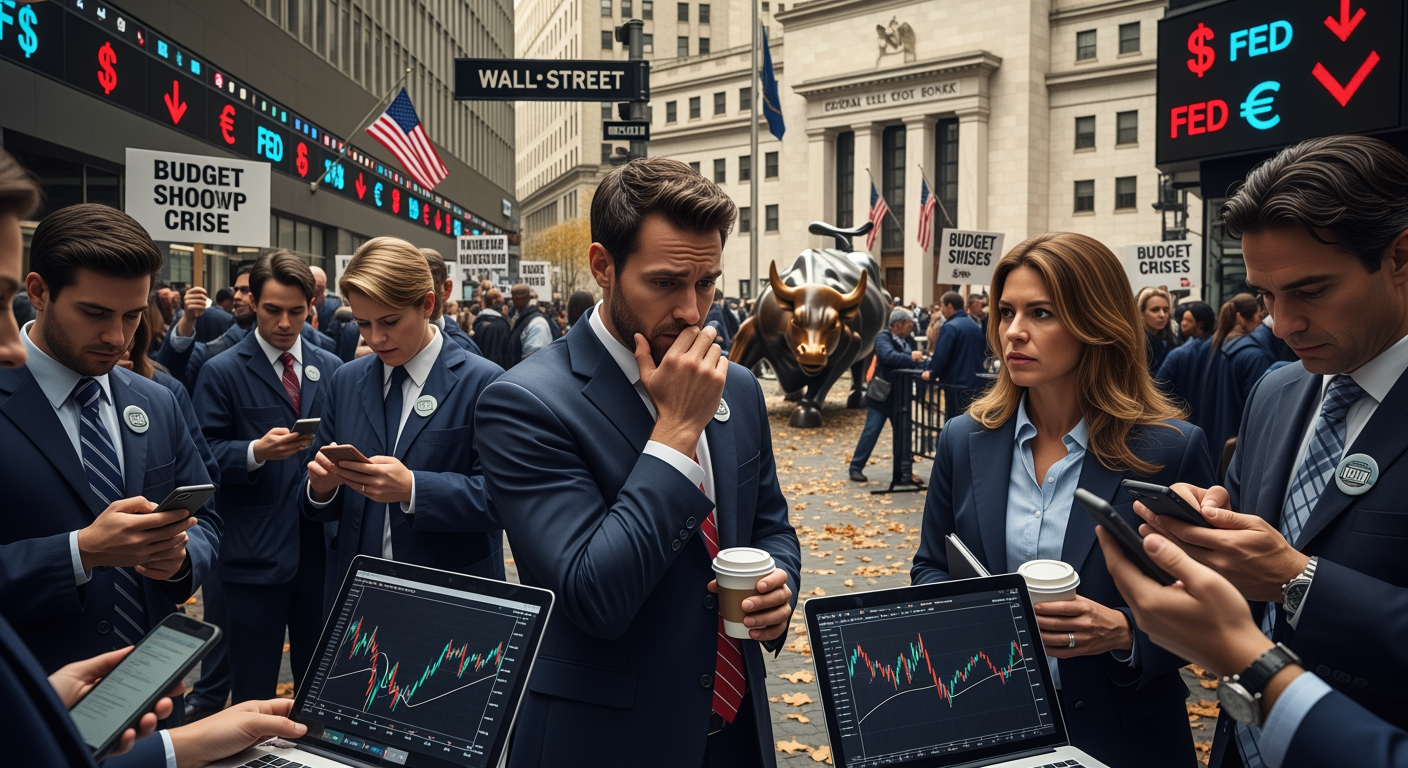
November 2025 is shaping up to be a pivotal, high-risk month for global financial markets. Both professional and retail investors are navigating an environment of intense uncertainty, driven by major central bank announcements—especially the Federal Reserve’s monetary policy—the ongoing US budget crisis and threat of a government shutdown, and escalating geopolitical tensions.
Caution is the watchword. Markets, already rattled by turbulence since the start of the year, are entering November with heightened vigilance. According to La Tribune, the combination of monetary policy decisions, budget debates, and international conflicts could trigger significant volatility, impacting equities, currencies, commodities, and bonds alike.
For both the general public and seasoned investors, understanding what’s at stake this November is critical. This article offers a deep dive into the risks, key players, potential consequences, and outlook for financial markets—helping you navigate this crucial period.
---
Major Central Banks: Decisions That Shake Global Finance
The Fed and Its Pivotal Choices
At the center of attention is the US Federal Reserve (Fed). After cutting its benchmark interest rate for the second time this year, the Fed now stands at a strategic crossroads. The federal funds rate, lowered to 4.50% in December 2024 after a series of reductions beginning in the fall, remains under close scrutiny.
Markets are now waiting to see whether the Fed will continue cutting rates, hold steady, or change course based on evolving inflation and employment data. According to Boursorama and the AMF, even the slightest shift in rhetoric from Fed Chair Jerome Powell can spark sharp moves in stock indexes, the dollar, and bond markets.
Meanwhile, the European Central Bank (ECB) has charted its own path: eight rate cuts since June 2024, bringing its key rate down to 2% by June 2025. This move aims to support a slowing European economy but widens the gap with US policy. Market participants are also watching the Bank of England, with Finance Minister Rachel Reeves set to unveil the UK budget on November 26—a key signal for Britain’s economic direction.
Diverging Monetary Policies: Risks and Opportunities
The growing divergence between US and European monetary policies is fueling market volatility. The IMF’s revised growth forecasts—1.8% for the US, 1% for the eurozone—underscore the fragile economic backdrop.
For investors, this environment means:
The decisions made in the coming weeks could set the tone for markets well into next year—balancing hopes for recovery against fears of a prolonged slowdown.
---
The US Budget Crisis: Shutdown Drama
A Shutdown That Paralyzes the US Economy
Since the start of the year, the US has been grappling with a government shutdown, partially paralyzing federal operations for the fifteenth time since 1981. This budget impasse, stemming from Congress’s failure to pass a spending bill, is weighing heavily on market and business confidence.
According to Scala Patrimoine, this shutdown is especially concerning given chronic over-indebtedness and deepening political polarization in Washington. Credit rating agencies like Fitch Ratings have recently downgraded French sovereign debt, reflecting broader anxiety about Western public finances.
Market and Investor Fallout
A prolonged shutdown leads to:
International investors, heavily exposed to US assets, are particularly vulnerable to any stress in these markets. According to the AMF, the heavy concentration of stock indexes in a handful of tech names only amplifies this vulnerability.
---
Geopolitical Tensions: The World on a Knife’s Edge
Conflicts and Global Risks
Geopolitics remain dominated by the ongoing Russia-Ukraine conflict, now in its third year. The recent incursion of Russian drones into Polish airspace, as highlighted by Scala Patrimoine, has reignited fears of regional escalation—especially given Poland’s NATO membership.
Other flashpoints include:
Impact on Financial Markets
Markets react to every geopolitical headline with sharp corrections and heightened volatility:
For investors, managing geopolitical risk is now central—requiring greater diversification and constant monitoring of global events.
---
Heightened Volatility: Markets Under Extreme Pressure
Key Numbers and Recent Trends
Since early 2025, financial markets have been in a near-constant state of turbulence. According to Medias24, global indexes have seen sharp swings, commodity prices are highly volatile, and macroeconomic uncertainty is on the rise.
A few standout figures:
US equities continue to climb, buoyed by a stellar earnings season—especially among tech giants like Nvidia, whose market cap has soared past $5 trillion on the back of the AI boom.
But this performance masks a heavy concentration in a few names, increasing the risk if the tide turns.
Most Exposed Sectors and Assets
Overall market liquidity remains solid, but is highly sensitive to negative shocks. Corrections are frequent, though markets have shown some resilience so far.
---
Key Players and Their Strategies Amid the Storm
Corporations, Institutions, and Influential Figures
Several major players are shaping market dynamics in November 2025:
Investment Strategies in Play
In the face of volatility and uncertainty, investors are focusing on:
Asset managers and investment funds are running multiple scenario analyses to anticipate potential shocks and adjust allocations accordingly.
---
Year-End Outlook and Future Trends
Possible Scenarios
As 2025 draws to a close, several scenarios are on the table for financial markets:
Global growth forecasts remain cautious: around 2.6% in 2025 and 2.4% in 2026 (Coface), with the IMF projecting similar numbers. Rising corporate bankruptcies and mounting political and social risks could weigh on recovery.
Key Trends for Investors to Watch
Markets remain in a turbulent zone, where caution and agility are essential.
---
Conclusion: Navigating Uncertainty—Stay Informed and Agile
November 2025 stands out as a turning point for global financial markets. With crucial decisions from major central banks, the US budget crisis, and rising geopolitical tensions, investors are facing heightened volatility and persistent uncertainty.
To weather this high-risk period, it’s essential to:
Markets, while resilient so far, remain vulnerable to unexpected events. For both retail and institutional players, the key will be to combine caution, agility, and constant vigilance to meet the challenges of this high-stakes November.
---
This article draws on the latest analyses from La Tribune, Boursorama, the AMF, Coface, Scala Patrimoine, Medias24, and insights from leading financial sector players as of November 2, 2025.---
❓ FAQ - Frequently Asked Questions
1. Why is November 2025 considered a high-stakes month for global markets?
Because several powerful drivers are colliding at once: pivotal central bank decisions (especially the U.S. Federal Reserve), an ongoing U.S. government shutdown and budget standoff, and escalating geopolitical tensions. The article notes that this mix can spark significant volatility across equities, currencies, commodities, and bonds. Markets are already on edge after a turbulent year and are entering November with heightened vigilance. Even small shifts in policy rhetoric or new geopolitical headlines can trigger sharp market moves. Investors are therefore focused on central bank guidance, fiscal developments in the U.S. and Europe, and conflict risks, all of which could set the tone for markets into next year.
2. What is the Federal Reserve deciding, and why does it matter so much?
The Fed cut rates for the second time this year and previously lowered the federal funds rate to 4.50% in December 2024 following reductions that began in the fall. Markets now await whether it will cut further, pause, or change course based on inflation and employment data. According to the article, even slight shifts in Chair Jerome Powell’s tone can move stock indexes, the U.S. dollar, and bond markets. This is why investors are highly sensitive to every signal. Meanwhile, Europe’s path differs: the ECB has made eight cuts since June 2024, reaching 2% by June 2025. The Bank of England is also in focus, with the UK budget due on November 26.
3. What does ‘diverging monetary policies’ mean, and how can it affect investors?
It refers to the U.S. and Europe taking different interest rate paths. The ECB’s eight cuts have lowered its key rate to 2% by June 2025, while the U.S. trajectory is under debate after the Fed’s recent cuts. This divergence fuels volatility and creates complex currency dynamics, particularly in the euro/dollar. The IMF’s revised growth forecasts—1.8% for the U.S. and 1% for the eurozone—add to the fragile backdrop. For investors, the article highlights heightened sensitivity to policy announcements from both the Fed and ECB and ongoing volatility in short- and long-term rates.
4. What is a U.S. government shutdown, and why does it matter for markets?
A shutdown happens when Congress fails to pass a spending bill, partially paralyzing federal operations. The U.S. has been dealing with such a shutdown since the start of the year—the fifteenth since 1981. The article stresses that this weighs on market and business confidence, especially given chronic over-indebtedness and deepening political polarization. It also creates uncertainty around fiscal stability, which can ripple across bond, equity, and currency markets and affect international investors heavily exposed to U.S. assets.
5. How is the current shutdown affecting the economy and investors?
A prolonged shutdown leads to reduced consumer spending and business investment, delays in key economic data releases, heightened uncertainty over medium-term fiscal stability, and increased volatility across bonds, equities, and currencies. The article warns that international investors are particularly exposed due to their large holdings of U.S. assets. It also notes that the heavy concentration of major stock indexes in a handful of tech names amplifies vulnerability if sentiment turns.
6. Which geopolitical tensions are shaping markets right now?
Key flashpoints include the Russia-Ukraine conflict—now in its third year—with Russian drones recently entering Polish airspace, raising concerns due to Poland’s NATO membership. The article also cites ongoing U.S.-China trade tensions, with reciprocal tariffs imposed since April 2025; political uncertainty in the Middle East, where 70% of Gulf GDP now comes from non-oil sectors; and rising cyber risks that could impact financial infrastructure. Markets are reacting to such headlines with sharp corrections and increased volatility.
7. What are safe havens doing, and why is gold in focus?
In risk-off periods, investors often rotate toward perceived safe havens. The article notes that gold has reached all-time highs—$3,820 per ounce in early November—amid heightened geopolitical and macro uncertainty. This reflects the market’s search for assets less exposed to shocks. At the same time, flows are being redirected toward sectors and regions viewed as less vulnerable to current risks, underscoring a broader defensive posture.
8. Which sectors and assets appear most exposed to volatility this month?
The article highlights several areas: tech stocks, which have been strong performers but are vulnerable to sharp corrections due to concentration risk; bonds, especially U.S. Treasuries, where volatility persists; commodities, with gold and oil up but exhibiting big swings; and cryptocurrencies, which are near record highs yet extremely volatile. While overall liquidity remains solid, it is highly sensitive to negative shocks, making corrections more frequent even as markets show some resilience.
9. Why is the concentration in tech stocks a risk?
U.S. equities have been buoyed by a stellar earnings season, particularly among tech giants such as Nvidia, whose market capitalization has surpassed $5 trillion amid the AI boom. However, the article warns that this strong performance masks a heavy concentration in a few names. Such concentration increases systemic vulnerability: if sentiment or earnings turn, index-level declines can be sharper because so much of the market’s performance is tied to a narrow set of companies.
10. What practical strategies are investors using to navigate this environment?
According to the article, investors are emphasizing diversification across stocks, bonds, commodities, and alternative assets; actively managing risk with frequent rebalancing based on incoming news; leaning into safe havens and defensive sectors such as healthcare, energy, and infrastructure; and closely monitoring credit quality and asset liquidity. Many asset managers are running multiple scenario analyses to anticipate shocks and adjust allocations. Key watchpoints include central bank announcements (Fed and ECB), the U.S. shutdown and European budget debates, corporate earnings—especially in tech and energy—geopolitical signals, and cyber risks.
11. What key numbers summarize current market stress?
The article cites several metrics: projected global growth of 2.6% in 2025 (Coface) and around 2.4% in 2026, with similar IMF projections; corporate bankruptcies up 4% in advanced economies in the first half of 2025; and a political and social risk index at a record 41.1%, up 2.8 points compared with the pre-pandemic average. Meanwhile, IMF growth forecasts stand at 1.8% for the U.S. and 1% for the eurozone. These figures frame an environment of softer growth, rising corporate stress, and elevated political and social risks.
12. What are the year-end scenarios, and what should investors monitor?
Three outcomes are outlined: gradual stabilization if the Fed and ECB reassure markets, the U.S. shutdown is resolved, and geopolitical tensions ease; ongoing volatility if uncertainties persist, with possible corrections in both equities and bonds; and heightened systemic risk if a new shock—political, social, or cyber—hits financial infrastructure. The article advises monitoring central bank announcements (especially Fed and ECB), progress on the U.S. shutdown and European budget debates, corporate earnings (notably tech and energy), geopolitical developments, and cyber risks, while maintaining diversification and adaptable strategies.