Geopolitical Factors in the Middle East: Impact on US Markets
Introduction
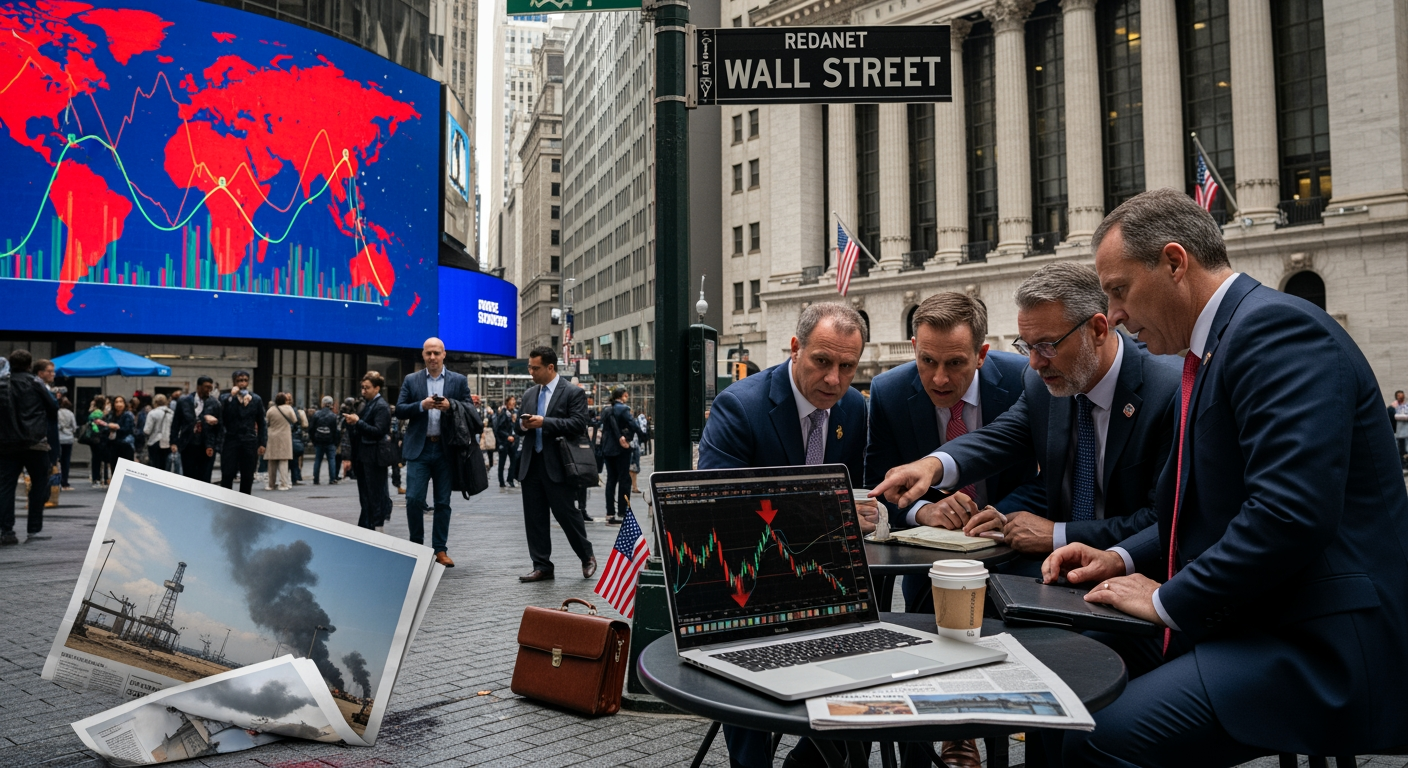
For several months now, geopolitical tensions in the Middle East have dominated the global stage, affecting not only regional stability but also the dynamics of international financial markets. US markets, in particular, have felt the ripple effects of this instability through heightened volatility—especially in the energy and defense sectors.
Why is this topic so critical right now? Because the link between the global economy and energy security has never been stronger. Investors are watching every event, every statement, every military or diplomatic move in the region, fully aware that even a minor incident can shake oil prices, defense industry stocks, or even the entire Wall Street landscape.
In this article, I’ll take you through an in-depth analysis of the major geopolitical factors in the Middle East and their direct impact on US markets. We’ll explore the causes, real-world consequences, key players, and trends to keep an eye on in the coming months.
---
Geopolitical Tensions in the Middle East: The Situation in 2025
Escalating Conflicts and Shifting Power Balances
The year 2025 has seen an intensification of conflicts in the region, far beyond the traditional Israeli-Palestinian confrontation. Since June 2025, multiple hotspots have emerged, involving Israel, Iran, Lebanon (via Hezbollah), as well as internal dynamics in countries like Syria and Iraq. This fragmentation of the geopolitical landscape makes risk assessment more complex and raises the likelihood of major incidents.
According to recent reports from the French Institute of International Relations (IFRI), the war between Hamas and Israel in Gaza has spilled over into Lebanon, highlighting the ongoing threat from Hezbollah, which reportedly still possesses thousands of rockets according to US sources. Meanwhile, the Syrian regime has collapsed rapidly, signaling a structural weakening of Iranian influence and presenting a political test for the entire Levant region.
Regional Rivalries and the Internationalization of Conflict
Beyond local players, regional power rivalries are intensifying: Iran and Israel remain the main poles, but Saudi Arabia, Turkey, and the Gulf monarchies also play decisive roles. The inclusion of Egypt and the United Arab Emirates in the BRICS group signals a nascent anti-Western alignment, while Saudi Arabia remains hesitant to fully commit.
The United States, under a Trump administration favoring transactional diplomacy, remains a key but unpredictable player. Closer ties with Gulf monarchies and Israel, pressure on Iran, and targeted US strikes on Iran’s nuclear program all add to the uncertainty.
---
The Middle East’s Strategic Weight on Global Markets
Energy Axis: Oil and Gas at the Heart of the Stakes
The Middle East remains the nerve center of global energy. According to BNP Paribas Economic Research, 34% of oil exports and 14% of liquefied natural gas (LNG) exports come from Gulf countries. Strategic maritime chokepoints like the Strait of Hormuz and Bab el-Mandeb are vital arteries for international trade:
Any disruption in these areas—whether blockades or attacks (piracy, military strikes)—triggers an immediate spike in oil and gas prices, directly impacting the US stock market, especially energy giants like ExxonMobil, Chevron, and Occidental Petroleum.
US Market Dependence and Global Arbitrage
Even though most Gulf LNG is exported to Asia, the rise of flexible contracts allows for arbitrage between Asian and European markets. This trend increases the vulnerability of Western economies—including the US—to geopolitical tensions in the region.
Two major risks stand out:
---
Increased Volatility on Wall Street: The Most Exposed Sectors
Energy Sector: Price Surges and Soaring Stocks
Every time tensions flare up in the Middle East, oil and gas prices shoot higher. US energy companies see their valuations rise, but volatility is extreme: a price surge can be followed by a sharp correction if the situation calms or global supply adjusts.
In 2025, the latest data shows Brent crude fluctuating between $95 and $120 per barrel, depending on the level of tension. Natural gas futures are also trading in a wide range, impacting strategies for major energy groups and institutional investors.
The most exposed companies:
Defense Industry: Renewed Interest and Rising Orders
Rising military tensions are driving up defense spending, both in the Middle East and the US. Weapons and military tech manufacturers are seeing their order books swell, fueled by regional demand and strong US government support.
Top performers include:
Volatility in these stocks is amplified by speculation, but the medium-term trend remains bullish, driven by ongoing geopolitical uncertainty.
---
Real-World Impacts for Investors and the US Economy
Higher Volatility and Portfolio Reallocation
For investors, today’s environment is defined by increased volatility across major stock indexes, especially the S&P 500 and Dow Jones. Wild swings (+/- 2 to 3%) have become common whenever a new attack or diplomatic statement emerges from the Middle East.
In response to this uncertainty, investment strategies are evolving:
Macroeconomic Consequences: Inflation and Growth Under Pressure
Soaring energy prices are fueling inflation in the US, which has already been under strain since late winter 2024. Rising production costs for businesses, combined with higher prices at the pump for consumers, are slowing economic growth.
According to the latest BNP Paribas forecasts, a sustained $10 increase in oil prices could shave 0.2 to 0.3 percentage points off US GDP over a year. Add to that supply chain pressures and increased uncertainty for exporting companies.
---
Key Players and Their Strategies Amid Uncertainty
US Companies: Adaptation and Resilience
Major energy and defense companies are ramping up risk management strategies:
Institutions and Governments: Political and Diplomatic Responses
The US administration under Donald Trump is favoring a transactional, pragmatic approach—alternating between military pressure and ad hoc negotiations with regional players. This unpredictable diplomacy adds to market uncertainty, with investors hanging on every tweet or official statement.
International institutions (UN, IMF, World Bank) are trying to anticipate shocks by ramping up early warning systems and humanitarian aid, but their ability to respond is limited given how quickly things change on the ground.
---
Outlook and Trends to Watch
Scenarios for Late 2025 and Early 2026
Experts agree on several possible scenarios:
Key Signals for Investors to Watch
To anticipate developments, it’s crucial to monitor:
---
Conclusion
In 2025, geopolitical tensions in the Middle East are a major driver of volatility for US markets, impacting energy and defense sectors most directly. Investors and businesses must navigate persistent uncertainty stemming from fragmented conflicts, energy dependence, and security challenges.
To succeed in this environment, staying informed, adapting investment strategies, and closely monitoring political and economic signals from the region are essential. More than ever, the Middle East remains at the heart of Wall Street’s—and the global economy’s—concerns.
---
❓ FAQ - Frequently Asked Questions
1. Why do Middle East tensions matter for US markets right now?
Geopolitical tensions in the Middle East are a key driver of US market volatility because the region sits at the heart of global energy supply and security. Even minor incidents can quickly move oil and gas prices, which ripple through to US energy companies and broader market indices. In 2025, conflicts have broadened beyond the Israeli-Palestinian arena to involve Israel, Iran, Lebanon (Hezbollah), Syria, and Iraq, making risks harder to assess and increasing the odds of disruptive events. Strategic maritime chokepoints like the Strait of Hormuz and Bab el-Mandeb amplify this sensitivity: any disruption there tends to push energy prices higher. This environment elevates energy and defense stocks while increasing day-to-day swings in the S&P 500 and Dow Jones. The result is a market landscape where political statements, military actions, and diplomatic signals from the region can swiftly shift investor sentiment and asset prices on Wall Street.
2. What does “volatility” mean here, and how is it showing up in US markets?
Volatility refers to the speed and magnitude of price moves. In the current context, it shows up as sharp, frequent swings in major US indices and sector-specific names driven by Middle East headlines. The article notes that the S&P 500 and Dow Jones have been experiencing wild moves of about +/- 2% to 3% around new attacks or diplomatic developments. Energy prices themselves are volatile: in 2025, Brent crude has fluctuated between $95 and $120 per barrel depending on tension levels, and natural gas futures are trading in a wide range. These moves feed directly into US energy stocks—often rising on price spikes and pulling back when risks appear to ease. Defense stocks also swing on expectations for spending and orders. The combination of headline risk, energy price sensitivity, and shifting risk appetite has made market moves larger and more frequent than usual.
3. Why do events in the Middle East move oil and gas prices so quickly?
The Middle East is central to global energy supply: Gulf countries account for 34% of oil exports and 14% of liquefied natural gas (LNG) exports. Key maritime routes—especially the Strait of Hormuz and Bab el-Mandeb—carry a large share of global energy and goods. When conflicts escalate or threats emerge against these routes, markets immediately price in supply risks. That means oil and gas prices jump, sometimes sharply, as traders anticipate potential blockades, attacks, or production disruptions. The article highlights that any interference in these chokepoints triggers an immediate spike in prices. These price moves directly affect US-listed energy companies, whose revenues and valuations are tied to global benchmarks, and can also influence broader market sentiment as higher energy costs feed into inflation and growth expectations. This rapid transmission mechanism is why relatively small regional events can have outsized effects on US markets.
4. What are the Strait of Hormuz and Bab el-Mandeb, and why are they critical?
They are strategic maritime chokepoints that carry significant portions of global trade and energy. The Strait of Hormuz handles 27% of maritime oil trade (over 80% of it going to Asia) and represents about 10% of global goods by volume. Bab el-Mandeb accounts for 12% of global goods by volume and 16% by value, including 11% of crude oil and 23% of wheat. Because so much oil, LNG, and key commodities pass through these narrow passages, any disruption—whether due to military action, piracy, or blockades—can immediately strain supply chains. Markets respond quickly by bidding up energy prices, which then affects US energy stocks and broader indices. The article emphasizes that these routes are “vital arteries” for global trade, making them focal points for risk when regional tensions increase, and a major channel through which Middle East events reach Wall Street.
5. What is LNG, and why would a Hormuz blockade hit prices?
LNG (liquefied natural gas) is natural gas cooled into a liquid for transport by ship. The Gulf region is a major LNG exporter, and flexible contracts increasingly allow cargoes to be redirected between Asia and Europe. This flexibility ties regional disruptions to wider price impacts. The article identifies two major risks: a blockade of the Strait of Hormuz—which would send LNG prices soaring given Qatar’s central role (20% of global LNG exports in 2023)—and constraints on Eastern Mediterranean gas production, particularly in Israel, which affects exports to Egypt. Because Western economies, including the US, are linked through these global gas flows and arbitrage between regions, disruptions in the Gulf can tighten supply and push international prices higher. Those higher prices can influence US markets through energy sector earnings, inflation expectations, and investor positioning across related assets.
6. Which US sectors and companies are most exposed to these tensions?
Energy and defense are the most exposed. In energy, price spikes tend to lift valuations, but swing risk is high. The article highlights: ExxonMobil (highly dependent on global markets and risk-prone regions), Chevron (active in several Gulf countries, vulnerable to supply disruptions), and Occidental Petroleum (a key shale producer still tied to global pricing). In defense, rising tensions and spending support stronger order books and investor interest. Noted beneficiaries include Lockheed Martin (missile defense), Raytheon Technologies (radars, missiles, cyber), Northrop Grumman, and General Dynamics (drones, aircraft, armored vehicles). While defense names can be volatile due to speculation, the medium-term trend is described as bullish amid persistent uncertainty. Overall, energy names move with commodity swings, and defense names respond to evolving military needs and US support tied to the regional situation.
7. How are defense stocks affected by the current situation?
Heightened military tensions in the Middle East are driving increased defense spending both regionally and in the US. The article reports swelling order books for weapons and military technology manufacturers, supported by regional demand and strong US government backing. Companies such as Lockheed Martin (notably missile defense systems), Raytheon Technologies (radars, missiles, cyber defense), Northrop Grumman, and General Dynamics (drones, aircraft, armored vehicles) are highlighted as top performers. While these stocks experience amplified volatility due to speculation and headline sensitivity, the medium-term outlook is characterized as bullish because geopolitical uncertainty remains elevated. In practice, that means investors often rotate into defense names when conflict risk rises, with performance influenced by contract flow, policy signals, and specific developments such as troop movements, strikes, or new procurement priorities tied to the evolving security landscape.
8. How could these tensions affect US inflation and economic growth?
Rising energy prices feed directly into US inflation by raising production costs for businesses and fuel costs for consumers. The article notes that inflation has been under strain since late winter 2024 and that higher oil and gas prices linked to Middle East tensions are adding pressure. This, in turn, can slow growth as companies face higher input costs and households see reduced purchasing power. According to BNP Paribas forecasts cited in the article, a sustained $10 increase in oil prices could shave 0.2 to 0.3 percentage points off US GDP over a year. Additional headwinds include supply chain pressures and increased uncertainty for exporting companies. Together, these factors create a drag on the broader economy, while also shaping market expectations for corporate earnings, interest rates, and sector performance.
9. What are investors actually doing in response to the current uncertainty?
The article outlines several shifts. First, investors are rotating toward defensive areas that tend to benefit or hold up during energy shocks and security crises—most notably energy and defense stocks. Second, they are increasing diversification by adding more uncorrelated assets such as gold and government bonds to buffer portfolio swings. Third, some are explicitly hedging geopolitical risk using options or derivatives to protect against adverse price moves triggered by new attacks, diplomatic escalations, or disruptions at strategic chokepoints. These actions reflect an environment where headline risk is high and market moves can be abrupt. The goal is to mitigate drawdowns, maintain exposure to potential beneficiaries of the tension-driven cycle, and preserve flexibility as scenarios evolve in the Middle East and policy responses unfold.
10. How are US companies adapting to manage these risks?
Major US energy and defense companies are intensifying risk management. According to the article, they are diversifying supply chains geographically to reduce exposure to any one region, investing in alternative energy to lessen dependence on Middle Eastern oil over time, and strengthening cybersecurity to guard against cyberattacks that may accompany geopolitical tensions. These steps aim to sustain operations amid potential disruptions to production, transport routes, or critical infrastructure. By broadening sourcing, accelerating energy transition investments, and hardening digital defenses, firms increase resilience against both immediate shocks (e.g., strikes affecting chokepoints) and structural shifts (e.g., changing alliances or export flows). This corporate posture reflects an expectation that uncertainty will persist and that operational flexibility will be a competitive advantage.
11. How does US policy under President Trump influence market uncertainty?
The article describes a transactional, pragmatic US approach that alternates between military pressure and ad hoc negotiations with regional players. Closer ties with Gulf monarchies and Israel, sustained pressure on Iran, and targeted US strikes on Iran’s nuclear program all add to uncertainty. Markets react not only to actions but also to communications: investors closely track official statements and even social media posts, as they can signal shifts in stance on sanctions, diplomacy, or military operations. This unpredictability complicates risk pricing for energy and defense stocks, while influencing expectations for commodity flows and global trade. In short, the combination of assertive moves and variable diplomatic engagement creates an environment where policy headlines can quickly move US markets, especially in sectors directly exposed to Middle East dynamics.
12. What scenarios and signals should investors watch into late 2025 and early 2026?
The article outlines three scenarios: Prolonged Escalation—continued clashes among Israel, Iran, and groups like Hezbollah keep volatility high with recurring spikes in energy and defense stocks; Temporary Easing—a truce or partial agreement calms markets, though the fragile situation makes relief uncertain and likely short-lived; Regional Realignment—shifts in Middle Eastern order, including new BRICS members and potential declines in Western influence, reshape energy and trade flows more durably. To anticipate moves, investors should monitor announcements from Saudi Arabia, Iran, and Israel; troop movements, strikes, and targeted operations; production and export decisions by oil and gas companies; and US policy signals on sanctions or diplomacy. These indicators help gauge whether risks are rising, stabilizing, or transforming.