Bitcoin ETFs Surge: Record Inflows and Massive Liquidations
Introduction: A Historic Night for the Crypto Market
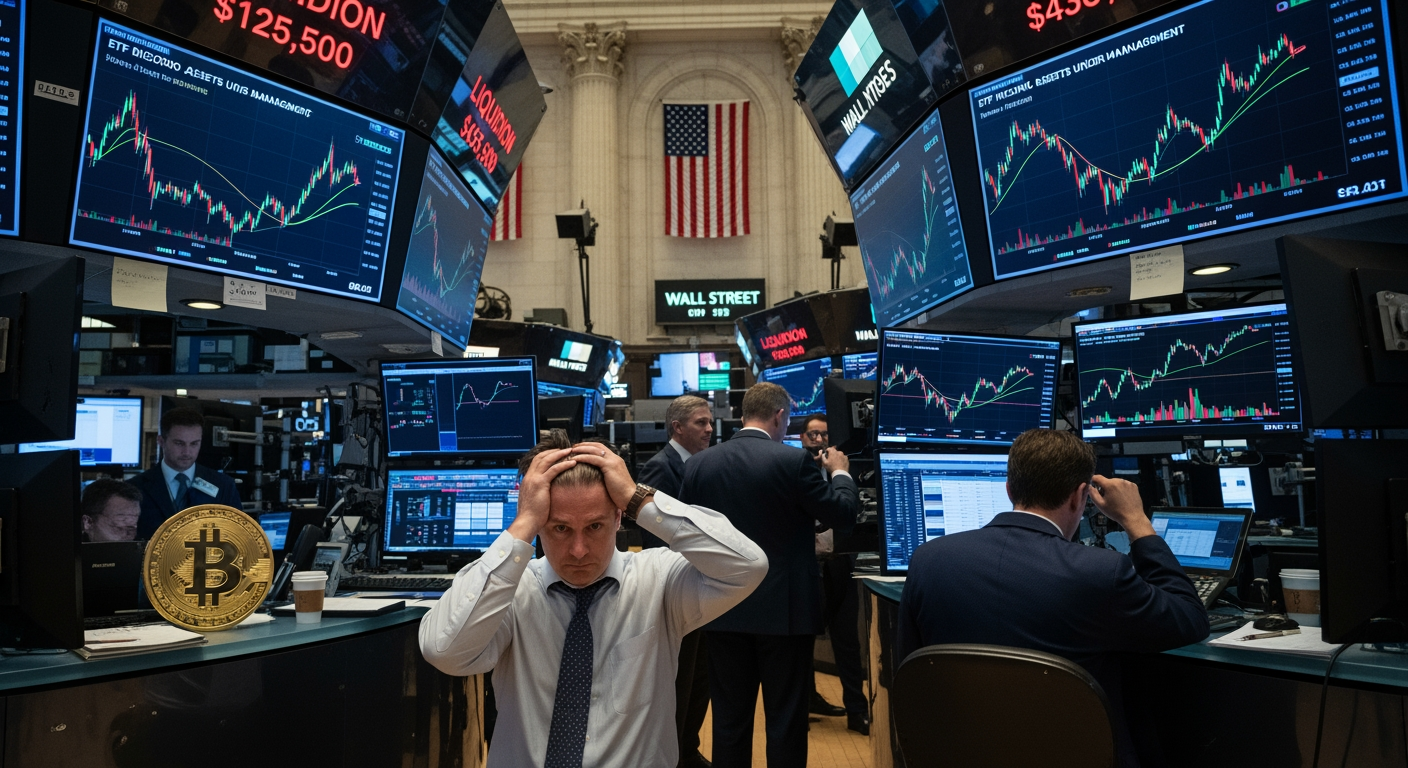
The crypto world just witnessed a night to remember. On October 7, 2025, spot Bitcoin ETFs saw an unprecedented wave of institutional inflows, with total daily volume topping $7.5 billion. This massive movement catapulted Bitcoin’s price to a spectacular new all-time high (ATH) of $125,500, smashing previous records and cementing the growing appeal of Bitcoin among institutional investors.
But the euphoria came with some serious turbulence. Over $438 million in long positions were liquidated in just 24 hours, once again highlighting the extreme volatility that defines the crypto market. This explosive mix of massive inflows and liquidations puts a spotlight on the unique dynamics shaping the sector in 2025—and raises plenty of questions about what’s next.
In this article, we break down the latest developments, the drivers behind this surge, what it means for investors, and the trends that could shape the market in the months ahead.
---
The Bitcoin ETF Boom: Numbers and Recent Trends
Record-Breaking Volumes Like Never Before
The start of October 2025 marks a turning point for Bitcoin ETFs—exchange-traded funds that let investors gain exposure to Bitcoin without actually holding it. According to Farside Investors, October 6 saw a net inflow of $1.205 billion into Bitcoin ETFs, making it the second biggest day in the sector’s history. The next day, total combined volume hit $7.5 billion, confirming the institutional frenzy surrounding this digital asset.
For context, the previous weekly record, set in November 2024, was $3.38 billion. This October week is closing in fast, with $3.24 billion in inflows over five consecutive days, according to Cointelegraph and SoSoValue.
The Role of Major Institutional Players
Finance giants are doubling down on the Bitcoin ETF market:
Total trading volume in Bitcoin ETFs topped $26 billion this week, while assets under management are now approaching $165 billion, according to Mitrade and Reuters.
An Amplified "Uptober" Phenomenon
Historically, October is a bullish month for crypto—a trend traders call “Uptober.” This seasonality, combined with a flood of institutional capital, is creating explosive momentum and driving wild price swings.
---
Why Are Bitcoin ETFs Attracting So Many Investors Now?
A Favorable Macroeconomic Backdrop
Several macro factors are fueling the rush into Bitcoin ETFs this October:
ETFs: The Preferred Gateway
Bitcoin ETFs offer several advantages that appeal to professional investors:
According to CoinDesk and Bloomberg, these features have accelerated Bitcoin ETF adoption, making them the main vehicle for institutional crypto exposure.
---
A New Bitcoin ATH: Causes and Implications
Breaking Through $125,500: What’s Driving the Surge?
Bitcoin’s price hit a new all-time high of $125,689 on October 5, 2025, according to Plus500 and Reuters. This rally is the result of several converging factors:
What It Means for Investors and the Market
Bitcoin’s surge has several concrete impacts:
---
Massive Liquidations: The Dark Side of Volatility
A Staggering Number: $438 Million Liquidated in 24 Hours
Crypto’s extreme volatility doesn’t benefit everyone. Alongside the surge, over $438 million in long positions were liquidated within 24 hours, according to data from Cryptoast and TradingView.
Here’s why:
The Market Impact
Massive liquidations have several effects:
---
Key Players and Institutional Flows: Who’s Leading the Charge?
BlackRock, Fidelity, ARK: The New Powerhouses
The dominance of major asset managers in the 2025 Bitcoin ETF market is clear:
These players are transforming the crypto market in significant ways:
The Role of Other Cryptos and Diversification Strategies
Institutional flows aren’t just about Bitcoin anymore. Ethereum, the second-largest crypto by market cap, is seeing its own ETF boom, with $1.3 billion in inflows and over $9.9 billion in volume this week. Funds are often using a “core-satellite” strategy:
This trend confirms that institutional crypto investing is broadening beyond just Bitcoin.
---
What’s Next for the Crypto Market: Are We Entering a New Era?
Headed for New Highs?
The current momentum points to several possible scenarios:
Regulatory and Security Challenges
The rise of Bitcoin ETFs also brings major questions:
---
Conclusion: A Defining Moment for Crypto and Finance
The explosion of Bitcoin ETFs in October 2025 marks a defining moment for both the crypto sector and global finance. Historic institutional inflows, record volumes, and Bitcoin’s surge to $125,500 all point to a maturing market—but also one with extreme volatility, as shown by massive liquidations.
For investors, this is a time of unprecedented opportunity—but also heightened risk. Bitcoin ETFs have become the main institutional gateway to crypto, while diversification strategies are expanding to include Ethereum and emerging DeFi trends.
The coming months will be critical: whether the rally continues, corrections set in, or regulations evolve, the crypto market is more in the spotlight than ever. Whether you’re a seasoned investor or just watching from the sidelines, one thing is clear: the Bitcoin and ETF revolution is just getting started.
---
❓ FAQ - Frequently Asked Questions
1. What is a spot Bitcoin ETF and why is it attracting so much interest now?
A spot Bitcoin ETF is an exchange-traded fund that lets investors gain exposure to Bitcoin’s price without holding the cryptocurrency directly. It trades on stock markets, offering liquidity and simplicity—no wallets or private keys to manage. The article cites several reasons for the surge in interest: clearer U.S. recognition and regulation for spot Bitcoin ETFs, which reassures institutions; operational benefits like transparency, security, and regular audits; and, for some funds, potential tax efficiencies versus holding BTC directly. Macro conditions are also supportive—concerns over the U.S. fiscal outlook, a weaker dollar, and the prospect of another rate cut are pushing investors to diversify into non‑correlated assets like Bitcoin. Together, these factors have made ETFs the preferred gateway for institutional crypto exposure, accelerating adoption and driving record inflows and volumes.
2. What records and key numbers were set in early October 2025?
The article highlights a string of records. On October 6, spot Bitcoin ETFs recorded a net inflow of $1.205 billion, the second-biggest day in the sector’s history. The following day, total combined volume hit $7.5 billion. For the week, Bitcoin ETF trading volume topped $26 billion, and assets under management are approaching $165 billion. Inflows over five consecutive days reached $3.24 billion, closing in on the previous weekly record of $3.38 billion set in November 2024. Bitcoin’s price also surged to a new all-time high of $125,689 on October 5, 2025. These figures underscore a historic wave of institutional participation and trading activity, concentrated within a few days.
3. What is “Uptober” and how did it influence this rally?
“Uptober” refers to the historical tendency for October to be a bullish month for cryptocurrencies. The article notes that this seasonality has been amplified in 2025 by a flood of institutional capital into spot Bitcoin ETFs. The combination of bullish seasonal sentiment and extraordinary ETF inflows created powerful momentum, helping propel Bitcoin to a new all-time high and driving unusually large trading volumes. In short, typical October optimism aligned with structural, institution-led demand, intensifying price moves and volatility.
4. How do ETF inflows push Bitcoin’s price higher?
The article explains that massive spot ETF inflows represent significant institutional buying, which sustains demand while reducing available supply. As ETFs absorb increasing amounts of BTC, the circulating supply available to the market tightens, contributing to scarcity and upward price pressure. This is reinforced by positive momentum and market sentiment—particularly a FOMO (fear of missing out) effect that brings in additional buyers. The presence of major asset managers also boosts credibility and draws more investors, creating a network effect that can further accelerate adoption and price gains.
5. Who are the leading players in Bitcoin ETFs and what are their contributions?
Major asset managers are driving the 2025 Bitcoin ETF boom. BlackRock leads with its iShares Bitcoin Trust (IBIT), pulling in $1.82 billion for the week and $970 million in a single day, capturing nearly half of weekly inflows. Fidelity and ARK 21Shares are also solidifying their positions with steadily growing volumes. Bitwise, VanEck, and Grayscale are active as well, with some focusing on specialized segments like mini trusts and Ethereum-linked ETFs. Their involvement boosts the sector’s credibility, attracts additional institutional capital, and contributes to supply pressure by absorbing more BTC, which can support prices.
6. What macroeconomic and regulatory factors are driving demand for Bitcoin ETFs?
Several factors are cited. Macroeconomically, a weaker U.S. dollar—driven by concerns over fiscal policy and the prospect of another rate cut—is encouraging investors to diversify away from traditional assets. Bitcoin’s low correlation profile makes it attractive in unstable markets. On the regulatory side, U.S. recognition and a clearer framework for spot Bitcoin ETFs have reassured institutions, enabling them to invest within a more secure legal environment. These conditions, combined with ETF-specific benefits like liquidity, simplicity, and oversight, are drawing substantial institutional inflows.
7. How are altcoins, especially Ethereum, being affected by the Bitcoin ETF surge?
The article notes that Bitcoin rallies often pull capital into other cryptocurrencies. In this episode, Ethereum stands out: its ETFs set records with $1.3 billion in inflows and over $9.9 billion in volume this week. This indicates that institutional participation is broadening beyond Bitcoin. Historically, such spillover can contribute to broader altcoin strength, though the article emphasizes ongoing volatility and the potential for sharp corrections even amid rising interest.
8. What does liquidation mean here, and why were $438 million in longs liquidated in 24 hours?
Liquidation refers to leveraged positions being automatically closed by exchanges when losses reach certain thresholds. The article reports that over $438 million in long positions were liquidated within 24 hours amid sharp market moves. Key drivers include high leverage usage—which magnifies both gains and losses—and sudden shifts in sentiment, such as profit-taking by institutions after rapid run-ups. Exceptional derivatives trading volumes can intensify these swings, creating chain reactions where a downturn triggers forced closures, adding to volatility.
9. How do massive liquidations impact the crypto market?
According to the article, large-scale liquidations have three main effects. First, they increase volatility by amplifying price swings and potentially deepening corrections. Second, they can act as a market cleansing mechanism, wiping out overly risky leveraged positions and setting a healthier base for future advances. Third, they may create opportunities for cautious investors—particularly those using unleveraged vehicles like ETFs—who are less exposed to forced closures and can navigate volatility without the added risk of leverage.
10. How are institutions structuring their crypto exposure?
Institutional flows are no longer limited to Bitcoin. The article describes a common “core-satellite” approach: maintaining a core position in Bitcoin, adding a growth allocation to Ethereum, and diversifying into tokens tied to DeFi, Layer‑2 solutions, or smart contract platforms. This reflects a broadening institutional thesis—Bitcoin as the core asset, with selective exposure to areas expected to benefit from ecosystem growth—while still operating within the liquidity and oversight advantages provided by ETFs and related products.
11. What should investors keep in mind during this rally?
The article emphasizes both opportunity and risk. Bitcoin ETFs have become the main institutional gateway, drawing historic inflows and contributing to a new all-time high. At the same time, extreme volatility persists, as shown by $438 million in liquidations within 24 hours. Investors should recognize that sharp short‑term corrections and consolidation phases are possible. Those using ETFs without leverage are less exposed to forced liquidations. Additionally, regulatory and security considerations remain important as frameworks evolve and ETF managers ensure asset safety and transparency. In short, momentum is strong, but risks are elevated.
12. What could happen next for Bitcoin and ETFs?
The article outlines several scenarios. If ETF inflows remain strong, Bitcoin could quickly target new all-time highs; some analysts do not rule out a run toward $150,000 by year‑end. Conversely, extreme volatility and recent liquidations could lead to technical corrections or consolidation. A third path is continued institutional adoption, with more major funds and insurers adding BTC. Regulatory and security questions will be central: adapting oversight frameworks, ensuring safe custody and transparency, and monitoring how large ETF holdings affect market liquidity and the long‑term distribution of Bitcoin.