A New Gold Rush in California as Prices Soar
Introduction: Gold Fever Returns to the West Coast
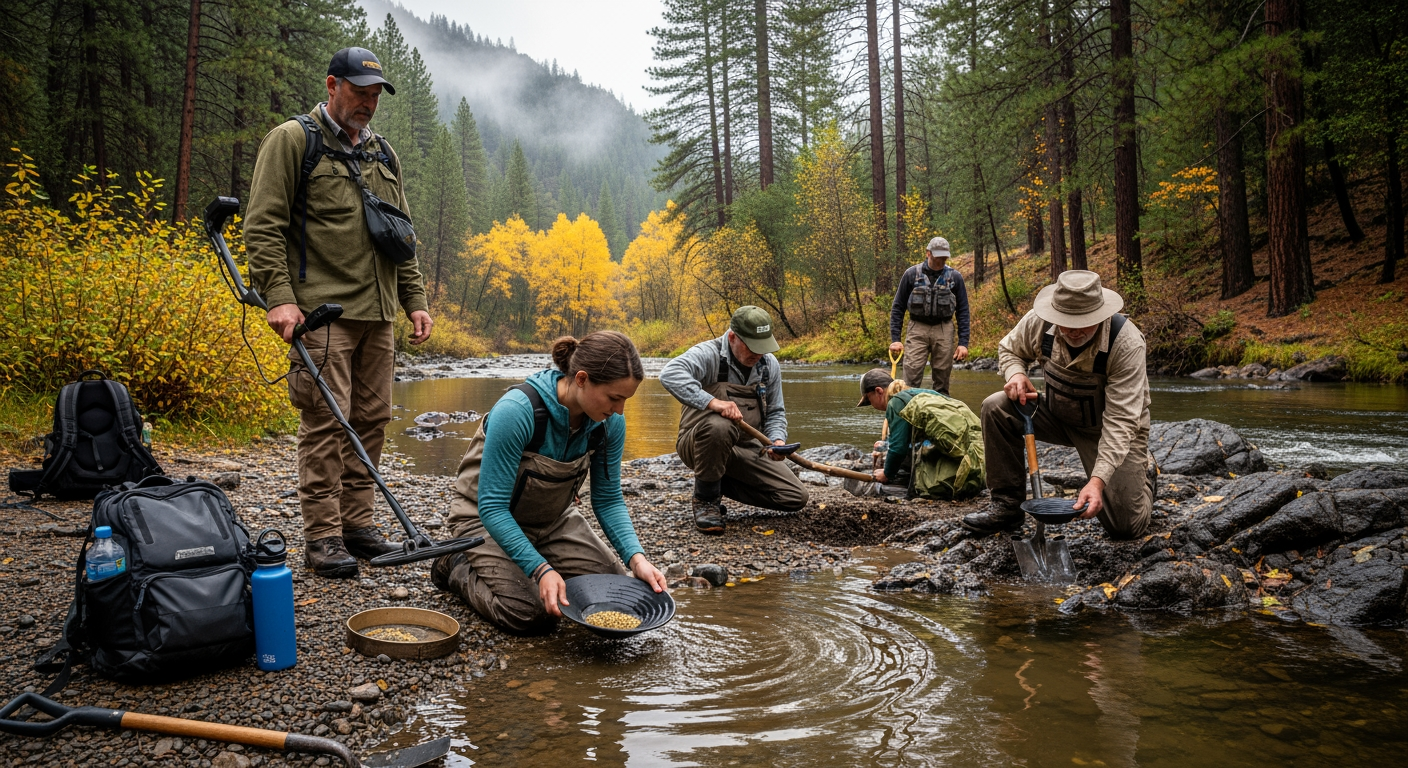
Over the past few months, a wave of nostalgia has swept across California. Shovels, pans, and metal detectors are once again a common sight along riverbanks and in the wooded hills of the Golden State. But this isn’t a Hollywood remake of the 1849 Gold Rush—it’s a real economic phenomenon: the historic surge in gold prices has sparked a dramatic revival in gold prospecting, drawing in both seasoned professionals and curious amateurs.
Behind this frenzy lies a tense global backdrop: extreme volatility in US financial markets, ongoing geopolitical uncertainties, and a growing search for safe-haven assets amid inflation and fears of a global slowdown. Gold, the timeless symbol of security, is back in the spotlight. As the yellow metal hits record highs, California is reliving the legendary days of its mining boom—but with 21st-century tools and attitudes.
Exploring this phenomenon means diving into today’s shifting economic landscape, understanding how a precious metal is once again shaping American society, and unpacking the deeper forces at play in the global economy as 2025 draws to a close.
---
Gold’s Meteoric Rise: Numbers and Drivers
Record-Breaking Highs
As of early November 2025, gold is trading around $4,013 per troy ounce, after breaking the symbolic $4,300 mark in October—a level never seen before on global markets. This explosive rally has been building for two years: gold prices have nearly doubled since 2023, with a particularly sharp acceleration over the past twelve months. Financial analysts from BDOR and Tauxde.com confirm the trend, predicting gold will stay above $4,000 in the coming weeks, with potential spikes up to $4,344 by the end of November.
Meanwhile, in Europe, gold is fetching €3,469 per ounce, and a one-kilo bar is nearing €111,535, according to real-time quotes from AuCOFFRE. These figures highlight both the intense global demand and the relative scarcity of the yellow metal.
What’s Fueling the Surge?
Several factors are driving gold’s current boom:
According to France 24 and AFP, these factors are converging to make gold the ultimate safe haven in fall 2025.
---
Prospectors Return: California Relives Its Legend
A Popular and Digital Craze
In California’s mountains and rivers, the scene now recalls the early days of the 19th-century Gold Rush. But today’s gold rush is also playing out on social media. Influencers like Matt James, an amateur prospector and project manager, share their finds and tips on YouTube, drawing thousands of new enthusiasts eager to learn how to spot those elusive nuggets and gear up effectively.
This excitement is having real economic effects: Matt James told AFP that his channels have seen a major spike in traffic, generating extra income from ads and commissions on specialized equipment sales. While most of these “2.0 prospectors” aren’t dreaming of striking it rich, many still hope for that one life-changing discovery.
High-Tech Tools and a More Technical Hunt
Gone are the days when a simple pan would do the trick. Today’s prospectors invest in advanced metal detectors, portable sluices, drones for mapping terrain, and mobile geolocation apps. The gear has become more professional, making the hunt more technical—but also more accessible for newcomers with no prior experience.
Specialized forums, video tutorials, and online communities play a central role in sharing tips and keeping the best spots under wraps, since gold remains rare and tough to find, as prospectors interviewed by France-Antilles point out.
---
Why Does Gold Hold Such Sway in Uncertain Times?
The Ultimate Safe Haven
Gold holds a unique place in both the collective imagination and investor strategy. For centuries, it’s been seen as a bulwark against instability: in times of war, financial crisis, or runaway inflation, gold endures and retains its value, even as currencies and “paper” assets can collapse.
In 2025, this appeal is only growing as risks multiply: US stock markets are experiencing wild swings, real estate is cooling, bonds are suffering from rising rates, and there’s growing distrust of sovereign debt. In this climate, gold offers reassurance—especially since it isn’t tied to any government or central bank.
Institutional and Retail Investors Jump In
It’s not just individuals getting in on the action: major Asian central banks, sovereign wealth funds, and global asset managers are all boosting their gold holdings to diversify portfolios and hedge against US market volatility. Trading volumes on major exchanges (LMBA, NYMEX, GLOBEX) have never been higher, according to platforms like AuCOFFRE.
Gold-backed ETFs are also seeing record demand, allowing millions of investors to gain exposure to the precious metal without the logistical headaches.
---
Economic and Social Impacts in California
Local Economic Revival and Environmental Challenges
The influx of prospectors is having a real impact on California’s economy. Specialty stores selling mining equipment are seeing sales explode, as are tour guides offering gold-themed excursions. Some historic Sierra Nevada towns, once sleepy, are experiencing a revival thanks to this adventure tourism.
But this rush isn’t without risks: California authorities are warning about the need to protect the fragile river and mountain ecosystems. Unregulated use of certain equipment, ignoring mining regulations, and increased foot traffic in protected areas are creating new challenges. The state has stepped up enforcement and reminds everyone that using mercury or motorized dredges is banned in many waterways.
A Social and Cultural Phenomenon
Beyond the economic angle, the 2025 gold rush is reigniting the collective imagination: the American dream of striking it rich, the spirit of the Wild West, and the idea that anyone can “try their luck.” Social media amplifies this, turning some prospectors into influencers and building a tight-knit community around the passion for gold hunting.
For many, it’s less about getting rich and more about reconnecting with nature, living an adventure, and sharing hands-on skills passed down through generations.
---
US Financial Markets: Volatility, Uncertainty, and the Shift to Gold
Wall Street Under Pressure
The US stock market context is a major driver of the gold rush. Wall Street has seen a string of down sessions in recent weeks, triggered by several factors:
In this uncertain climate, many investors are reducing their exposure to risky assets and reallocating part of their portfolios to gold. This “flight to quality” is fueling gold’s rise, creating a virtuous cycle that reinforces its reputation as a safe haven.
Investment Strategies and Portfolio Shifts
On the ground, financial advisors are increasingly recommending that gold make up 5–10% of diversified portfolios, especially via ETFs or physical purchases (coins, bars). Institutional buyers are ramping up hedging strategies with NYMEX futures contracts, adding further upward pressure on prices.
The momentum is so strong that some analysts are speculating gold could top $4,500 an ounce by year’s end if US market volatility continues.
---
Outlook and Trends for Gold and California
How High Can Gold Go?
Many experts believe the global backdrop will keep supporting higher gold prices, at least in the short term. As long as economic, geopolitical, and monetary uncertainties persist, gold will continue to play its role as the ultimate fallback asset. Tauxde.com forecasts a range of $4,000 to $4,344 by the end of November, with even more volatility possible if new market tensions arise.
Still, some analysts urge caution: a stabilization in US markets, easing trade tensions, or normalization of inflation could trigger profit-taking and a temporary pullback in gold. History shows that speculative bubbles in precious metals never last forever.
California: A Testbed for a New Model?
The 2025 gold rush highlights California’s ability to reinvent itself in the face of economic shocks. Straddling tradition and innovation, the region is attracting both nostalgia seekers and forward-thinkers: sustainable mining, adventure tourism, digital content, and e-commerce are all reshaping the contours of the gold-mining adventure.
Looking further ahead, sustainability will become a key question: how can the passion for gold prospecting be balanced with environmental protection and local economic development? Authorities, advocacy groups, and prospectors themselves will all play a central role in avoiding the mistakes of the past.
---
Conclusion: Gold as a Mirror of Today’s Anxieties and Dreams
California’s new gold rush isn’t just a symptom of soaring international prices. It reflects something deeper: in an uncertain world, people crave tangible assets, new horizons, and the chance to try their luck—just like the pioneers did.
Gold, the ultimate safe haven, stands as a barometer of economic and geopolitical anxiety. But the gold fever of 2025 also reminds us that human adventure, the search for meaning, and innovation are still at the heart of the California dream. Balancing caution and hope, this 21st-century gold rush may be sketching the outlines of a more resilient, creative economy—one shaped by those who, armed with a pan or a smartphone, are still searching for that elusive nugget.
---
❓ FAQ - Frequently Asked Questions
1. What is driving the new gold rush in California?
California is seeing a revival in gold prospecting because gold prices have surged to historic levels amid global uncertainty. Volatile US stock markets, renewed geopolitical tensions (including US–China trade frictions and the war in Ukraine), persistent inflation, and doubts about central banks’ ability to stabilize economies have all pushed investors toward safe-haven assets like gold. At the same time, social media has amplified interest by showcasing modern prospecting through influencers who share techniques and gear, drawing in curious amateurs. This combination of price momentum, risk aversion, and online visibility is pulling both seasoned prospectors and newcomers back to California’s rivers and hills in search of nuggets, echoing the state’s 19th-century legacy with a 21st-century twist.
2. How high are gold prices now, and what are analysts expecting in the near term?
As of early November 2025, gold trades around $4,013 per troy ounce after breaking $4,300 in October—an unprecedented level. Prices have nearly doubled since 2023, with an especially sharp run-up in the past year. Analysts cited from BDOR and Tauxde.com expect gold to remain above $4,000 in the coming weeks, with potential spikes up to $4,344 by the end of November. In Europe, gold is quoted around €3,469 per ounce, with a one-kilo bar nearing €111,535 (AuCOFFRE). These figures reflect both strong global demand and the metal’s scarcity. While momentum is robust, some observers note that market stabilization or easing geopolitical and inflation pressures could prompt a temporary pullback.
3. Why is gold considered a safe-haven asset in 2025?
Gold is viewed as the ultimate safe haven because it has historically held value through wars, financial crises, and inflationary periods, while currencies and other “paper” assets can falter. In 2025, its appeal is reinforced by sharp swings in US stock markets, cooling real estate, pressure on bonds from higher rates, and rising skepticism about sovereign debt. Crucially, gold is not tied to any single government or central bank, which bolsters its role as a hedge against policy uncertainty and currency devaluation. With multiple risks converging—from geopolitics to monetary concerns—investors are turning to gold as a stabilizing anchor in their portfolios.
4. Who is buying gold right now—individuals or institutions?
Both. The article highlights massive purchases by Asian central banks, increased allocations from sovereign wealth funds and global asset managers, and strong participation by retail investors. Trading volumes on major exchanges (LMBA, NYMEX, GLOBEX) have reached record levels, according to AuCOFFRE. Gold-backed ETFs are also seeing record demand, allowing millions of individuals to gain exposure without handling physical bars or coins. This broad-based buying—from institutions seeking diversification and hedges to individuals responding to volatility—has reinforced the metal’s upward trend and liquidity.
5. How are US stock market conditions pushing investors toward gold?
Recent declines on Wall Street stem from concerns about the profitability of large AI-related investments, mixed earnings from major tech names that weigh on the S&P 500 and Nasdaq, and broader worries about growth, jobs, and financial stability under a tight Federal Reserve policy. In response, many investors are cutting exposure to riskier assets and reallocating part of their portfolios to gold—a classic “flight to quality.” This rotation supports higher gold prices and reinforces its reputation as a safe haven during periods of financial market stress.
6. How is modern gold prospecting in California different from the 1849 era?
Today’s prospectors use high-tech tools rather than just pans and shovels. Advanced metal detectors, portable sluices, drones for mapping, and mobile geolocation apps make the hunt more technical and, in some ways, more accessible to beginners. Online forums, video tutorials, and tight-knit communities share tips and help guard promising locations. Social media-savvy prospectors showcase methods and finds, drawing new participants. However, gold remains rare and hard to find, as highlighted by prospectors interviewed by France-Antilles—so while the technology has improved, success still requires patience, skill, and respectful practices.
7. What role is social media playing in the 2025 gold rush?
Social media is fueling education, community building, and visibility. Influencers like Matt James—an amateur prospector and project manager—share techniques and discoveries on platforms like YouTube, which has attracted thousands of newcomers. This attention has real economic effects: James told AFP that his channels are seeing a spike in traffic and generating extra income through ads and commissions on gear sales. Beyond the economics, social platforms strengthen a community ethos around prospecting, mixing the thrill of discovery with practical learning and a revival of hands-on, outdoor skills.
8. Is the new gold rush helping local economies, and what are the environmental concerns?
Yes—and there are trade-offs. On the economic side, specialty shops selling prospecting equipment report booming sales, tour guides are offering gold-themed excursions, and some historic Sierra Nevada towns are experiencing renewed activity thanks to adventure tourism. Environmentally, California authorities warn that unregulated equipment use, ignoring mining rules, and heavier foot traffic can harm fragile river and mountain ecosystems. Enforcement has been stepped up, and officials remind prospectors that using mercury or motorized dredges is banned in many waterways. Balancing tourism and tradition with environmental protection is a central challenge.
9. How are investors adding gold to their portfolios, according to the article?
Financial advisors increasingly suggest allocating 5–10% of diversified portfolios to gold, typically via gold-backed ETFs or physical purchases such as coins and bars. ETFs have seen record demand, giving investors exposure without the logistics of storage and transport. On the institutional side, buyers are also using NYMEX futures to hedge, adding to upward pressure on prices. These approaches reflect a broader shift toward gold as a diversifier and safe haven amid market volatility, inflation concerns, and geopolitical risk.
10. Could gold go even higher, and what might cause a pullback?
Momentum remains strong: some analysts speculate gold could surpass $4,500 per ounce by year-end if US market volatility persists. In the nearer term, Tauxde.com forecasts a range of $4,000 to $4,344 by the end of November, with the potential for sharp moves if new tensions arise. However, a stabilization in US markets, easing trade frictions, or a normalization of inflation could lead to profit-taking and a temporary decline. The article also cautions that speculative bubbles in precious metals have not lasted indefinitely in the past.
11. Why is California described as a testbed for a new gold-related model?
The 2025 gold rush blends tradition with innovation: sustainable mining practices, adventure tourism, digital content creation, and e-commerce are reshaping the gold-mining experience. California’s mix of history, natural landscapes, and tech-savvy culture positions it to experiment with ways to harness interest in prospecting while supporting local economies. Looking ahead, the key challenge is sustainability—finding the balance between passion for gold, environmental protection, and community development so that the mistakes of the past aren’t repeated.