2026 Social Security Financing Bill: Key Debates and Votes in the National Assembly
Introduction: A High-Stakes Budget for Social Security
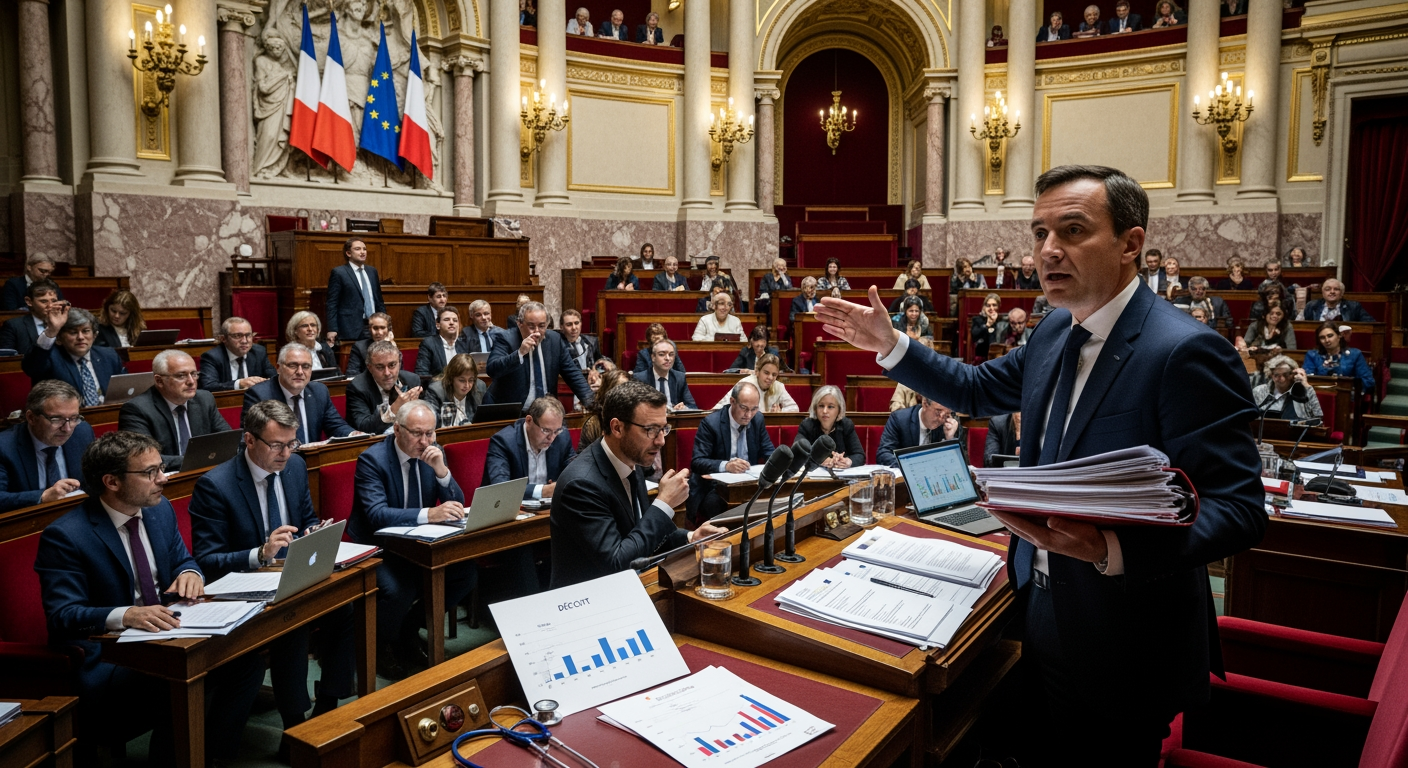
November 2025 will be remembered for a parliamentary session as technical as it is decisive: the review of the 2026 Social Security Financing Bill (PLFSS). At the heart of the National Assembly, lawmakers, the government, and the opposition are locked in intense debate over the financial roadmap that will shape healthcare, social protection, and the nation’s budget balance for the coming year.
But this is about more than just numbers. Lawmakers face a dual challenge: restoring the trajectory of public finances as the Social Security deficit remains high, and ensuring the sustainability of a social model under significant strain—from an aging population and a public hospital crisis to rising expectations from citizens.
In this context, every amendment, vote, and debate takes on heightened political and economic significance. At stake are crucial decisions on how to share the burden, tax policy, revenue, and social spending—choices that will impact households, businesses, and local governments. Let’s take a behind-the-scenes look at this budget marathon, where macroeconomics, social solidarity, and the challenges of the 21st century intersect.
A Tight Budgetary Context: Social Security Under Deficit Pressure
Persistent Imbalances Despite Economic Recovery
The Social Security deficit remains one of the most closely watched issues in public debate. According to the government’s proposal, the overall balance of Social Security administrations (ASSO) is expected to remain in the red in 2025, with a return to surplus projected for 2026. However, this surplus is fragile and hinges on significant cost-saving measures, especially as healthcare spending is rising again due to demographics and an aging population.
Official data shows the government aims to reduce the Social Security deficit to €17.5 billion in 2026, down from over €23 billion expected for 2025. This turnaround relies on an aggressive savings strategy, spending restraint, and increased revenue efforts. Still, many experts see this as a risky bet, given ongoing pressure on public hospitals and the need to fund new social demands.
Priority Areas: Healthcare, Pensions, Families
The main branches impacted by the PLFSS are healthcare, pensions, family benefits, and workplace accidents. Healthcare is the biggest concern, with annual spending exceeding €250 billion. Pension reform remains a political hot topic, with a possible suspension of the 2023 Borne reform up for discussion in the Assembly next week.
For families and natalist policy, the focus is on adjusting benefits to keep pace with inflation and evolving social needs. Local governments, which manage many healthcare and social service facilities, are also affected by budget adjustments.
A Path Monitored by Brussels and the Markets
France remains under close watch from European institutions and financial markets, both of which expect clear signs of control over social and public deficits. Some parliamentary groups have set a target of reducing the overall deficit to 3% of GDP by 2032—a goal that would require a major rebalancing of both revenue and spending to maintain the country’s financial credibility.
Debates in the National Assembly: Issues, Players, and Parliamentary Dynamics
A Compressed Timeline and High-Pressure Process
The review of the 2026 PLFSS kicked off on Tuesday, November 4, in the National Assembly, led by General Rapporteur Thibault Bazin (Les Républicains) and with input from rapporteurs across the political spectrum. Sessions are moving at a brisk pace, with debates scheduled through Sunday, November 9, and a final vote expected on Wednesday, November 12, after the Armistice Day break.
Since discussions began, over 500 amendments have been reviewed, with 88 adopted so far. Nearly 1,000 amendments remain to be debated. This flurry of activity highlights the vibrancy of democratic debate, but also the complexity of the bill, which touches on taxation, benefits, social governance, and healthcare cost controls.
Political Groups in Action: Majority, Opposition, and Alliances
Each parliamentary group is pushing its own priorities. The presidential majority emphasizes the need to restore financial balance without undermining social coverage, focusing on spending control and tougher anti-fraud measures. The opposition, meanwhile, is pushing for changes on several key points, including capital taxation, progressive contributions, the fate of pension reform, and public hospital funding.
The Socialists, for example, are advocating for a significant increase in the general social contribution (CSG) on capital income—from 9.2% to 10.6%—which would generate an additional €2.66 billion for Social Security. They’re also proposing a series of measures to raise up to €26.9 billion in new revenue and achieve €14 billion in savings, while targeting spending on hospitals, nursing homes, and household purchasing power. Their stated goal: reduce the deficit to €11.1 billion by 2026, compared to the government’s €17.5 billion projection.
The government, for its part, is calling for a full parliamentary debate—without resorting to the controversial Article 49-3—to ensure transparency and respect for Parliament’s role. It insists that the "revenue" portion of the PLFSS must be adopted before moving on to spending measures, a prerequisite for considering social measures like the much-anticipated suspension of pension reform.
Key Votes and Decisions
Among the votes already taken, the Assembly rejected a proposal to eliminate payroll tax exemptions for apprentice wages—a sign of continued support for apprenticeships in the context of youth employment. Other amendments, affecting capital taxation, CSG progressivity, and employer payroll tax relief, are sparking heated debate and occasional cross-party alliances.
The "revenue" section of the PLFSS is set to be adopted this weekend, a necessary step before moving on to discussions about healthcare spending, family policy, and support for local governments. Pressure is mounting on lawmakers to reach a compromise, as the government currently rules out any forced passage.
Key Measures in the 2026 PLFSS: Taxation, Revenue, and Savings
Raising the CSG on Capital Income
One of the most notable proposals comes from the Socialist group, which wants to raise the CSG on capital income from 9.2% to 10.6%. If adopted, this would bring in nearly €2.66 billion annually and help fund Social Security’s growing needs over the long term. The move is framed as a matter of tax fairness, asking more from those with significant capital and wealth.
The Socialists are also pushing for greater CSG progressivity on capital, a new 1% social levy on tax-free capital transfers, and a doubling of the so-called “GAFAM tax” on digital services. Altogether, these measures could generate nearly €10 billion in new revenue without increasing the tax burden on lower-income households.
Combating Fraud and Finding New Funding Sources
The bill includes tougher measures against social contribution fraud, expected to yield an extra €200 million. Other options under consideration include a tax on processed foods high in fat, sugar, or salt, and on ads lacking a Nutri-Score label, with a projected yield of €200 million.
On the savings side, eliminating certain flat-rate employer payroll tax deductions—especially for small and medium-sized businesses—is being considered, with a budget impact of nearly €1 billion.
Social Spending: Hospitals, Nursing Homes, and Childcare in the Spotlight
On the spending front, opposition groups are calling for urgent measures to support public hospitals, nursing homes, and childcare centers, with €1.2 billion earmarked for improving pay and working conditions. Suspending pension reform, if passed, would add another €500 million in costs.
The government, meanwhile, is banking on strict regulation of the ONDAM (national target for health insurance spending) to contain rising costs while still funding top healthcare and social priorities.
Real-World Impacts for Markets, Investors, and the Economy
Market Reactions and Financial Credibility
Financial markets closely monitor the Social Security deficit as a key indicator of France’s public debt sustainability. A credible reduction in the deficit, backed by structural reforms, reassures investors and keeps borrowing costs down. Conversely, any budget slippage or political uncertainty can drive up interest rates and threaten France’s credit rating.
Ratings agencies and the European Commission are watching the progress of the 2026 PLFSS closely, especially as France has pledged to bring its deficit below 3% of GDP by 2032. Decisions on capital taxation, anti-fraud measures, and spending controls are thus critical to maintaining international confidence.
Implications for Businesses and Local Governments
Businesses are directly affected by changes to payroll tax relief, digital taxation, and taxes on processed foods. Any shift in fiscal or social rules can impact their competitiveness, hiring capacity, or investment plans. Small businesses, which often benefit from tax relief programs, are especially focused on debates over the potential reduction or elimination of these advantages.
Local governments, which manage a growing number of healthcare and social service facilities, are also impacted by decisions on funding for childcare, public hospitals, and other services. Any cuts or cost-shifting could undermine their financial stability and social service capacity.
The Role of Households and Social Protection
Households will feel the effects of the 2026 PLFSS through changes in social benefits, possible CSG adjustments, potential increases (or not) in family allowances, and access to healthcare. The sustainability of the healthcare and pension systems—especially amid persistent inflation—remains a top concern for French families.
Expert Analysis: Causes, Consequences, and Outlook for the 2026 PLFSS
Causes of the Imbalance: A Demographic and Economic Equation
The persistent Social Security deficit is driven by a mix of structural and cyclical factors:
The 2026 PLFSS aims to address these issues by simultaneously boosting revenue, cutting costs, and making targeted investments.
What Happens if the Bill Isn’t Passed?
Passing the "revenue" section of the PLFSS is critical. Without this vote, spending measures—including the suspension of pension reform—can’t be considered. This would stall the entire budget process, risking delays in payments to social agencies, straining hospital and pension fund cash flow, and sending a negative signal to European partners.
For now, the government is refusing to use Article 49-3, preferring open debate and compromise. But tensions are rising in the Assembly, where every group is fighting for its priorities in a context of a relative majority.
What’s Next?
In the medium term, the sustainability of France’s social model remains an open question. Several trends are emerging:
Bringing the deficit below 3% of GDP by 2032 will require collective effort and bold budget choices, especially in a low-growth, high-pressure social environment.
Conclusion: A Turning Point for Public Finances and National Solidarity
The 2026 PLFSS is a pivotal moment for the future of France’s social model. Balancing deficit control with social solidarity, the debate in the National Assembly highlights both the tensions and the system’s capacity for innovation and adaptation. The decisions being made now will shape not just the balance of social accounts, but also the quality of care, protection for the most vulnerable, and national cohesion.
For markets, businesses, local governments, and households, the choices made in these days will weigh heavily on the country’s economic trajectory. The question remains: will political compromise rise to the challenge, and can France reconcile fiscal discipline with social justice as 2026 approaches?
---
❓ FAQ - Frequently Asked Questions
1. What is the 2026 Social Security Financing Bill (PLFSS) and why does it matter?
The PLFSS is the annual financial roadmap for France’s Social Security system (ASSO). It sets out how healthcare, pensions, family benefits, and workplace accident insurance will be funded and controlled in the coming year. The 2026 bill is pivotal because the Social Security deficit remains high, while demographic pressures (aging population), the public hospital crisis, and rising social expectations strain the system. Lawmakers must balance deficit reduction with maintaining social protection. Decisions on taxes, anti-fraud measures, spending control, and support for hospitals and families will directly affect households, businesses, and local governments, and influence France’s financial credibility with European institutions and markets.
2. What is the current budget context and the deficit target for 2026?
Despite an expected economic recovery, Social Security accounts are still in deficit. The government projects a reduction in the Social Security deficit to €17.5 billion in 2026, down from over €23 billion expected in 2025, with a fragile return to surplus hinging on significant savings. Healthcare spending alone exceeds €250 billion annually and is rising due to demographics. Some parliamentary groups also link the effort to a broader goal of bringing the overall public deficit below 3% of GDP by 2032. The Socialist group proposes an alternative path that would raise additional revenues and savings to reduce the 2026 deficit further, to €11.1 billion.
3. Which areas of Social Security are most affected by the bill?
The PLFSS primarily affects healthcare, pensions, family benefits, and workplace accidents. Healthcare is the largest and most pressured area, with spending over €250 billion and renewed cost growth. Pension reform remains politically sensitive, with a possible suspension of the 2023 Borne reform to be discussed. Family policy debates focus on adjusting benefits to inflation and evolving needs. Local governments, which manage many healthcare and social facilities (hospitals, nursing homes, childcare), are also directly impacted by funding decisions and cost-shifting.
4. How is the parliamentary process unfolding and what are the key dates?
Debates began Tuesday, November 4, in the National Assembly, led by General Rapporteur Thibault Bazin (Les Républicains), with sessions running at a brisk pace through Sunday, November 9, and a final vote expected Wednesday, November 12, after the Armistice Day break. Over 500 amendments have been reviewed, with 88 adopted so far, and nearly 1,000 still to be debated. The government insists the “revenue” section must be adopted before spending measures can be considered—an essential step for items like the potential suspension of pension reform.
5. What is Article 49-3 and how is it being handled in this debate?
Article 49-3 is referenced in the article as a controversial path often associated with “forced passage.” The government is calling for a full parliamentary debate without resorting to Article 49-3, emphasizing transparency and respect for Parliament’s role. For now, it rules out any forced passage and seeks compromises across groups, even as debates intensify within a relative majority context.
6. What changes to taxation and revenue are being debated?
Key proposals include raising the general social contribution (CSG) on capital income from 9.2% to 10.6%, expected to raise €2.66 billion annually. The Socialist group also advocates greater CSG progressivity on capital, a new 1% social levy on tax-free capital transfers, and doubling the digital services “GAFAM tax.” Together, these latter measures could generate nearly €10 billion without increasing the burden on lower-income households. The broader Socialist package aims for up to €26.9 billion in new revenue and €14 billion in savings. Additionally, tougher anti-fraud actions could yield €200 million, and taxes on processed foods high in fat, sugar, or salt—and on ads lacking a Nutri-Score—are estimated at €200 million.
7. What is the CSG and what change is proposed for capital income?
The CSG is the general social contribution that helps fund Social Security. A notable proposal would raise the CSG rate on capital income from 9.2% to 10.6%, bringing in about €2.66 billion annually. Proponents frame this as tax fairness, asking higher contributions from those with significant capital. The Socialist group also wants more progressivity on capital-based CSG, alongside other targeted levies. These measures aim to bolster Social Security’s long-term financing without increasing the burden on lower-income households.
8. What spending measures are proposed for healthcare and social services?
Opposition groups propose urgent support for public hospitals, nursing homes, and childcare centers, with €1.2 billion earmarked to improve pay and working conditions. Suspending pension reform, if adopted, would add another €500 million in costs. The government, meanwhile, is relying on strict regulation of the ONDAM (the national target for health insurance spending) to contain rising costs while prioritizing core health and social needs.
9. What key votes or decisions have already taken place?
The Assembly rejected a proposal to eliminate payroll tax exemptions for apprentice wages, signaling continued support for apprenticeships amid youth employment concerns. As of now, 88 amendments have been adopted out of more than 500 reviewed, with nearly 1,000 still pending. The “revenue” section is set to be adopted this weekend, a prerequisite before the Assembly can move on to spending items such as healthcare funding, family policy, support for local governments, and any consideration of suspending pension reform.
10. How could the PLFSS affect households, businesses, and local governments?
Households may be affected by changes to social benefits, possible CSG adjustments, family allowance decisions, and access to healthcare. Businesses could see impacts from shifts in payroll tax relief, digital taxation, and potential taxes on processed foods, influencing competitiveness, hiring, and investment. Small and medium-sized enterprises are especially sensitive to any reduction of flat-rate employer deductions under consideration. Local governments, which operate many healthcare and social facilities, may face financial pressures depending on funding decisions for hospitals, nursing homes, and childcare, with any cuts or cost-shifting risking their stability and service capacity.
11. What happens if the revenue section isn’t passed?
Passing the “revenue” section is critical. Without it, spending measures—including the possible suspension of pension reform—cannot be considered. This would stall the entire budget process, risking delays in payments to social agencies, straining hospital and pension fund cash flows, and sending a negative signal to European partners. The government currently prefers open debate and compromise and rules out forced passage, but tensions in the Assembly remain high.
12. How are markets and the EU likely to react, and what should investors watch next?
Markets closely track the Social Security deficit as a signal of France’s debt sustainability. Credible deficit reduction backed by structural measures reassures investors and helps contain borrowing costs; slippage or political uncertainty can push up rates and weigh on the credit rating. Ratings agencies and the European Commission are watching the 2026 PLFSS, especially as France targets a deficit below 3% of GDP by 2032. Investors can watch for adoption of the revenue section, clarity on capital taxation and anti-fraud measures, the stance on hospital and social spending (via ONDAM), and the final vote expected on November 12.