10-Year US Treasury Yield Drops, Markets Breathe a Sigh of Relief
Introduction: When Rates Set the Tone for the Markets
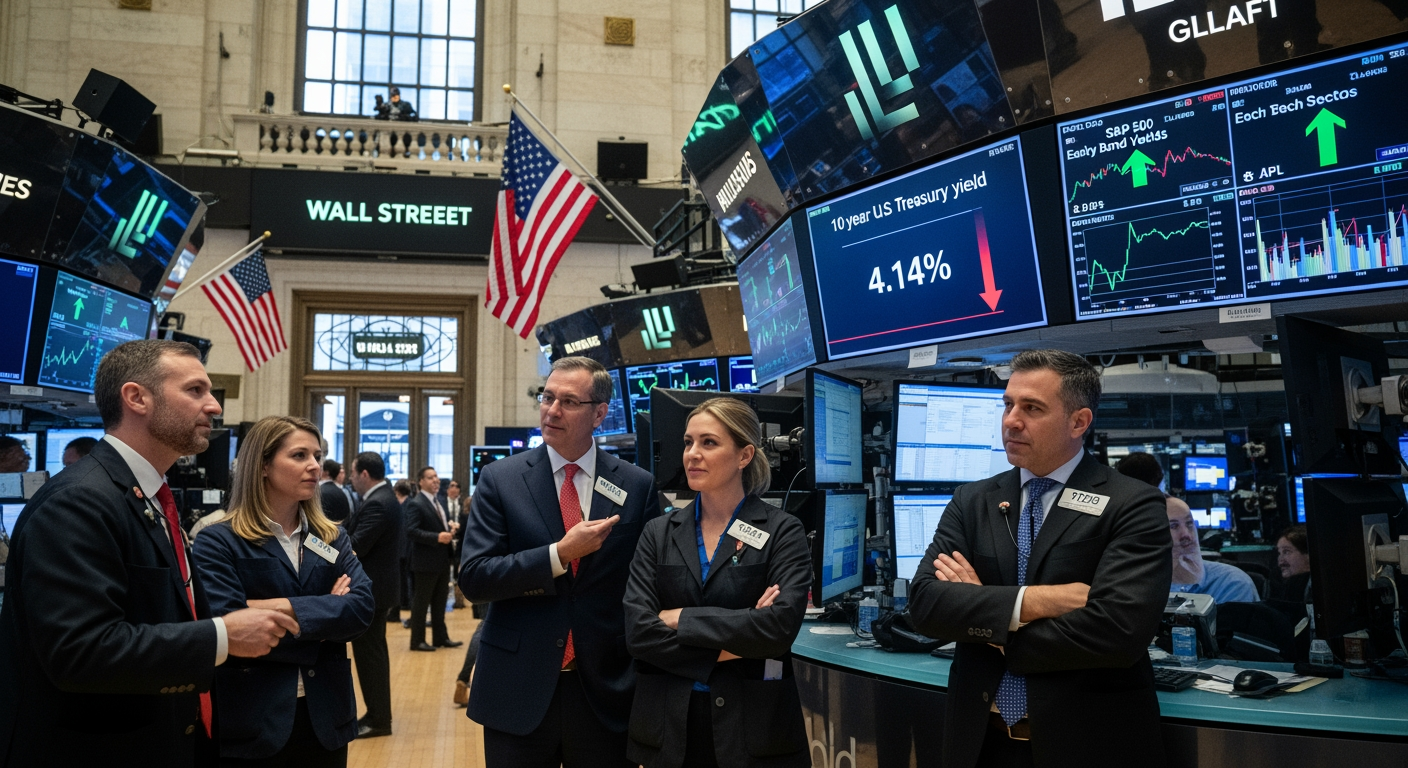
If you follow economic news, you know that the 10-year US Treasury yield is much more than just a number—it’s a true barometer for investors, shaping everything from the stock market and credit conditions to overall confidence in the economy. Over the past two weeks, markets have been rattled by rising yields, fueled by political and economic uncertainty. But on Monday, October 6, 2025, some relief finally arrived: the 10-year yield slipped back to around 4.14% after flirting with its highest levels of the year.
Even a slight pullback in yields had an immediate impact: major US indexes, especially the S&P 500 and Nasdaq, bounced higher. Tech and healthcare sectors—often sensitive to rate moves—got a much-needed breather. So, what’s behind this easing? What does it mean for investors and the real economy? Let’s dive into the details of this financial sequence that’s been making headlines.
US Yields: A Key Indicator Always Under the Microscope
The US bond market is constantly under watch, since the 10-year Treasury yield serves as a benchmark for everything from mortgage rates and corporate financing to the cost of government debt. In recent days, the yield has hovered between 4.12% and 4.16%, marking a drop of nearly 0.3% since early September, according to Trading Economics and TradingView data.
Why Is the 10-Year Yield So Important?
When yields climb, it’s often a sign of market anxiety, persistent inflation, or a monetary policy seen as too restrictive. Conversely, a drop in yields is viewed as a sign of relief—or at least cautious optimism.
A Look Back at Two Weeks of Tension
Since mid-September, several factors have driven yields higher:
But in recent days, the tide has turned: softer labor market data and early rumors of possible rate cuts in the coming months have helped bring the 10-year yield back down, reassuring investors.
Easing Yields: Why Markets Are Breathing Easier
A decline in the 10-year Treasury yield acts as a lever for the stock market, especially for so-called growth sectors.
Direct Impact on the Indexes
This move is especially noticeable in the tech and healthcare sectors:
Why Are Tech and Healthcare So Sensitive to Rates?
What’s Driving the Easing: The Fed, Jobs, and the Global Backdrop
The Fed’s Growth-Inflation Dilemma
The Federal Reserve’s wait-and-see approach is at the heart of the current easing. After hiking rates several times since 2022 to rein in inflation, the US central bank is now signaling that a policy shift could come as soon as late 2025. According to Reuters and Bloomberg, markets are now almost fully pricing in a quarter-point rate cut this month, with another expected in December.
This outlook takes pressure off longer-term yields, signaling a willingness to support growth and avoid overly tight monetary policy.
Labor Market Shows Signs of Cooling
The latest jobs data—delayed by the government shutdown—shows a moderation in demand and a slowdown in job creation. This eases fears of an overheating economy and, in turn, tempers expectations for further rate hikes.
International Factors: Europe and Japan Under Pressure
Recent rate hikes in Europe and Japan, driven by political uncertainty and monetary policy adjustments, had contributed to higher US yields. But things now appear to be stabilizing, allowing the 10-year yield to settle into a calmer trajectory.
Real-World Impacts for Investors and the Economy
For Individual Investors
For Businesses
For the Broader Economy
Key Players and Their Reactions
The Federal Reserve
The Fed is front and center. Members including Chair Jerome Powell and Governor Stephen Miran are highly anticipated this week for their comments on future policy direction. The upcoming FOMC minutes should provide valuable clues about the path of rates.
S&P 500 and Nasdaq Companies
Major tech (Apple, Microsoft, Nvidia) and healthcare (Pfizer, Johnson & Johnson, UnitedHealth) companies are quick to respond to easing yields, adjusting their investment strategies and financing plans accordingly.
Institutional Investors
Pension funds, insurers, and asset managers are highly exposed to rate volatility. The drop in the 10-year yield allows them to adjust their portfolios with greater confidence while benefiting from the rally in risk assets.
Outlook and Future Trends: Are Rates Normalizing?
Scenarios for the Coming Months
Trends to Watch
Conclusion: A Welcome Breather, But Caution Still Needed
The drop in the 10-year US Treasury yield is a real breath of fresh air for financial markets after two weeks of heightened tension. Indexes—led by tech and healthcare—are benefiting from the easing, and investors are regaining some peace of mind. But this calm shouldn’t overshadow lingering uncertainties, especially on the political and monetary fronts.
The path of US rates remains a major issue for the months ahead. The signals from the Fed, developments in the labor market, and US fiscal management will all be closely watched. For investors, businesses, and savers, the coming period calls for caution—while also opening up new opportunities in both bonds and stocks.
Keep an eye on upcoming data releases, Fed decisions, and international news—because in finance, nothing is ever set in stone. For now, though, the drop in the 10-year yield marks a return to calm that many had been hoping for.
---
❓ FAQ - Frequently Asked Questions
1. What is the 10-year US Treasury yield, and why is it considered a market barometer?
The 10-year US Treasury yield is the interest rate the US government pays to borrow money for ten years. It’s widely watched because it serves as a benchmark for borrowing costs across the economy. According to the article, it reflects market expectations for medium-term growth and inflation, directly influences the cost of borrowing for households and businesses, and acts as a reference for many financial products (from mortgages to mutual funds, ETFs, and derivatives). When the yield rises, it can signal market anxiety, persistent inflation, or expectations of restrictive monetary policy; when it falls, it often signals relief or cautious optimism. Because so many financial decisions and valuations hinge on this rate, even small moves can ripple through stocks, bonds, and corporate financing.
2. What changed on October 6, 2025, and how did markets react?
On Monday, October 6, 2025, the 10-year US Treasury yield slipped back to around 4.14% after recently testing its highest levels of the year. That easing provided immediate relief to risk assets. Major US indexes rebounded: the S&P 500 gained nearly 2% over the past week, and the Nasdaq rose more than 3% over five days. Growth-oriented sectors—especially technology and healthcare—led the move. Large tech names like Apple, Microsoft, and Nvidia saw share price gains, while healthcare companies such as Pfizer, Moderna, and major insurers also benefited. The pullback in yields helped reduce financing pressures and boosted the present value of future earnings, improving sentiment after two tense weeks of rising rates.
3. Why had yields been rising in the prior two weeks?
The article points to three main drivers: (1) A partial federal government shutdown disrupted key economic data releases and raised doubts about US fiscal management, adding uncertainty. (2) Investors expected a more hawkish tone from the Federal Reserve in its fight against inflation, keeping upward pressure on rates. (3) Rising borrowing costs in Europe and Japan spilled over into global markets, pushing US yields higher. Together, these factors stoked concerns about inflation, policy tightness, and global rate dynamics—conditions that typically lift longer-term yields. This backdrop kept markets on edge until more recent developments began to ease those pressures.
4. What triggered the recent easing in yields?
Several developments helped pull the 10-year yield lower. Softer labor market data—released after delays tied to the government shutdown—signaled moderating demand and slower job creation, reducing fears of an overheating economy. At the same time, markets began to factor in early rumors of possible rate cuts in the coming months, reflecting a potential shift in Federal Reserve policy. The Fed’s recent wait-and-see stance reinforced the idea that policy may ease to support growth. Internationally, pressures from earlier rate moves in Europe and Japan appeared to be stabilizing, removing an additional source of upward pressure on US yields. Together, these factors allowed the 10-year yield to settle into a calmer range.
5. How do lower 10-year yields support stocks like the S&P 500 and Nasdaq?
Lower yields reduce discount rates used to value future cash flows, which tends to lift stock valuations—especially for growth-heavy indexes. The article notes that as the 10-year yield eased, the S&P 500 rose nearly 2% over the past week and the Nasdaq rebounded more than 3% in five days. Lower financing costs and improved confidence also feed through to sectors that rely on external capital. Tech and healthcare led the gains, with major companies in both areas benefiting from a more favorable cost of capital and a market narrative that the Federal Reserve could shift toward easing to support growth.
6. Why are tech and healthcare especially sensitive to interest rates?
Tech and healthcare companies often depend on long-term investment and access to capital. According to the article, lower 10-year yields reduce their cost of capital and increase the present value of future cash flows—key for growth-oriented firms. Tech companies frequently fund innovation through debt or capital raises, making financing conditions crucial. Healthcare players, which invest heavily in long-term research and development, similarly benefit when borrowing costs fall and capital becomes easier to access. As yields eased, both sectors saw relief, with notable names in each responding positively.
7. What does a lower 10-year yield mean for individual investors right now?
The article highlights three practical implications: (1) Relief for stock portfolios: lower yields support company valuations, particularly for firms that rely on external financing. (2) Reduced volatility: stabilizing or falling yields tend to dampen sharp market swings, making portfolio management easier. (3) Opportunities in bonds: for investors seeking safety, 10-year Treasuries offer attractive yields with less upward pressure than in recent weeks. Overall, the easing provides a calmer backdrop, though the article still advises caution given lingering uncertainties around policy, labor market developments, and fiscal dynamics.
8. How do easing yields affect businesses and corporate financing?
For companies, lower yields translate into reduced borrowing costs, encouraging investment and growth. The article notes that easing yields make bond issuance more attractive, particularly for large publicly traded firms, improving access to capital markets. Lower rates also increase the present value of long-term projects, which can support innovation, expansion, and strategic investments. In aggregate, this improves corporate financing conditions and can help reaccelerate activity that had been constrained when yields were rising.
9. What are the potential effects on mortgages and the broader economy?
Because mortgage rates are often pegged to the 10-year yield, easing can help stabilize or reduce mortgage costs, supporting the housing market and making homeownership more accessible. More broadly, a lower-rate environment encourages consumer borrowing and spending, which can bolster overall economic activity. The article frames these effects as part of the real-world transmission of bond-market moves: more favorable financing conditions for households and businesses can lift confidence and demand, aiding growth—provided other risks, such as fiscal or inflation shocks, remain contained.
10. What is the Federal Reserve signaling, and how is the market interpreting it?
After rate hikes since 2022 to combat inflation, the Federal Reserve has adopted a wait-and-see approach and is signaling that a policy shift could come as soon as late 2025. According to the article, markets are now almost fully pricing in a quarter-point rate cut this month, with another expected in December. This outlook helps ease longer-term yields by signaling a willingness to support growth and avoid overly tight policy. Investors are also watching upcoming FOMC minutes and comments from Chair Jerome Powell and Governor Stephen Miran for guidance on the path of rates.
11. What scenarios are outlined for the coming months, and what could change them?
The base case cited by Trading Economics is for stabilization: the 10-year yield could hover around 4.06% by quarter’s end and dip to 4.02% in twelve months if the Fed continues to ease policy. The article also notes possible upside risks: a resurgence in inflation or a worsening budget crisis could send yields back up. Conversely, lower yields could restore liquidity and risk appetite, supporting a return to risk assets and more IPO activity. These paths depend on policy, data, and confidence staying on track.
12. Which trends and events should investors watch to gauge where yields go next?
The article highlights three trend lines: (1) US fiscal policy—how the government addresses the shutdown and avoids a debt ceiling crisis will be crucial for rate stability. (2) Inflation and growth—any renewed inflation or sharp growth slowdown could alter the expected rate path. (3) Geopolitics and global markets—tensions in Europe, Asia, or the Middle East can sway confidence and yields. Practically, the piece advises keeping an eye on upcoming data releases, Federal Reserve decisions and minutes, and international developments, since these will shape both the direction of yields and broader market sentiment.